The Question We Get Every Season
People often ask, “When’s the best time to come?” That’s a hard question, because every part of our season has something special to offer.
September produces some incredible trout. August brings remarkable variety. There isn’t a bad week to be on these rivers. But if you asked me to pick one week — not as a guide, but simply as someone who loves being out here — it would be early July.
Surprisingly, the fishing isn’t the first reason.
By the Second Morning, Something Changes
The phones have long since lost service. The schedules and deadlines that seemed so important back home begin to fade.
Coffee somehow tastes better beside a quiet river. Conversations slow down. People start noticing things they hadn’t seen on the first day.
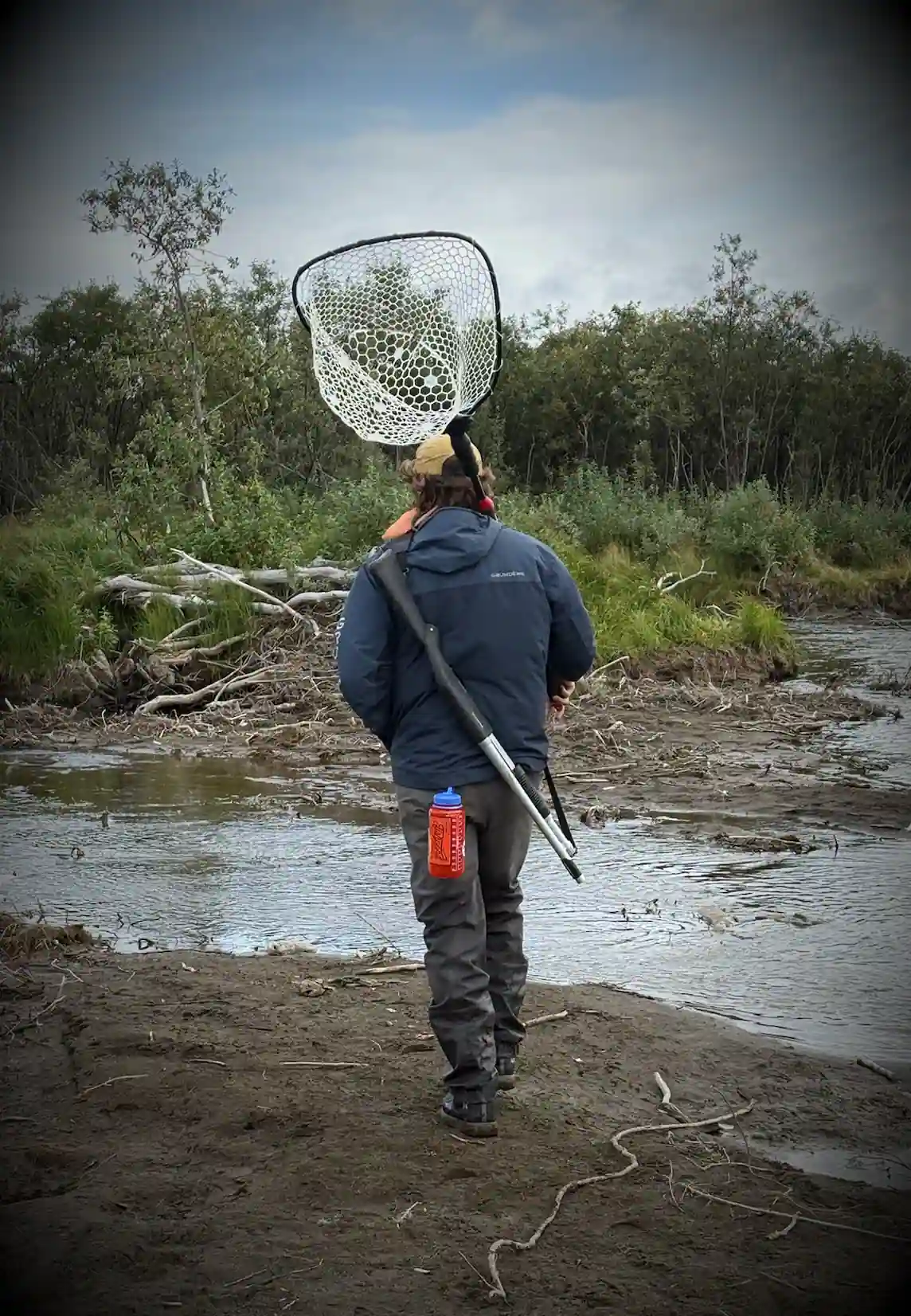
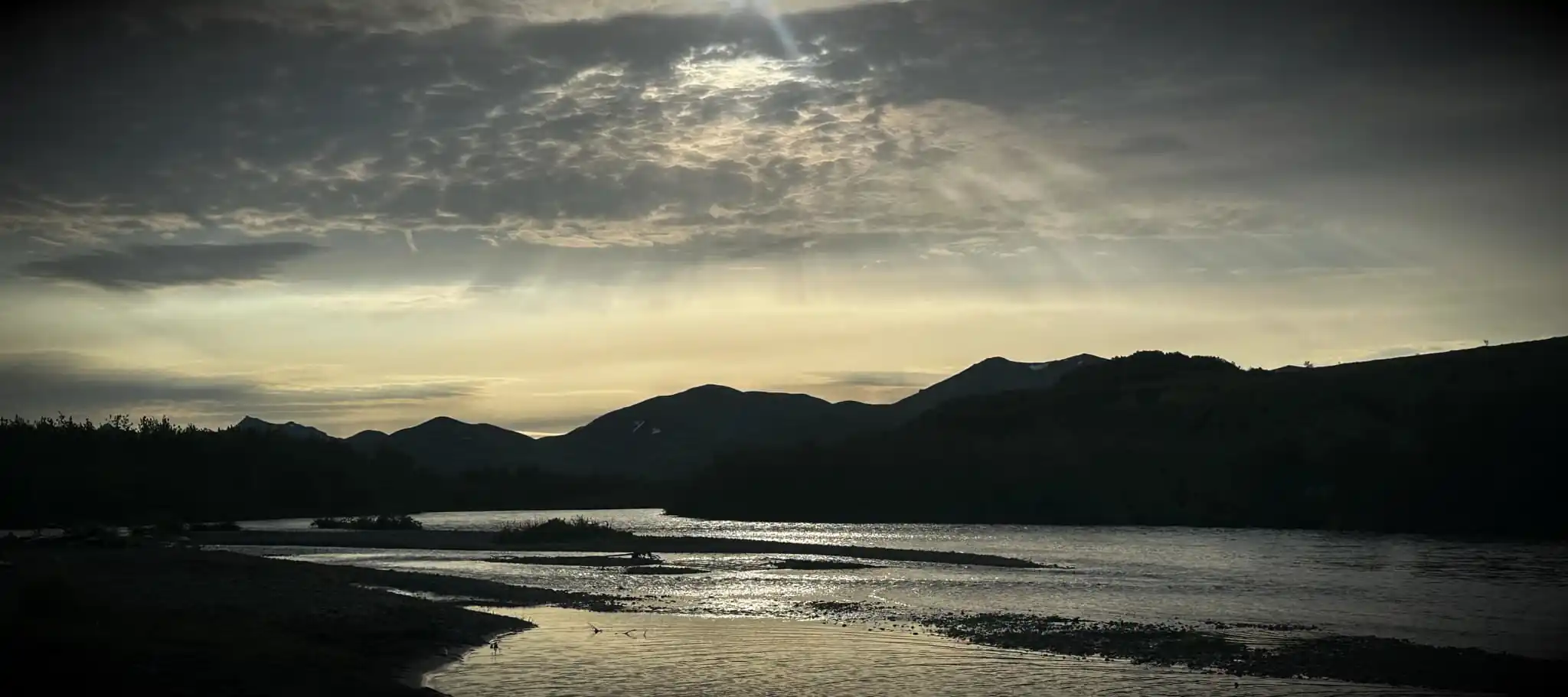
A pair of sandhill cranes glides overhead. A fox appears along a gravel bar. Fresh wolf tracks wind down the edge of the river. A floatplane disappears beyond the mountains, and suddenly it hits you — we’re truly alone out here.
That feeling is difficult to describe until you’ve experienced it. I’ve watched it happen hundreds of times. Guests arrive excited about catching fish. By the third or fourth day, they’re talking just as much about the country as they are the fishing. They’re taking more photographs. Sitting a little longer after dinner. Looking around instead of checking a watch.
The pace of life changes. That’s one of my favorite things to witness.
The Fishing Is Exceptional — But It’s Not the Whole Story
Early July brings rainbow trout that are active, aggressive, and willing to chase.
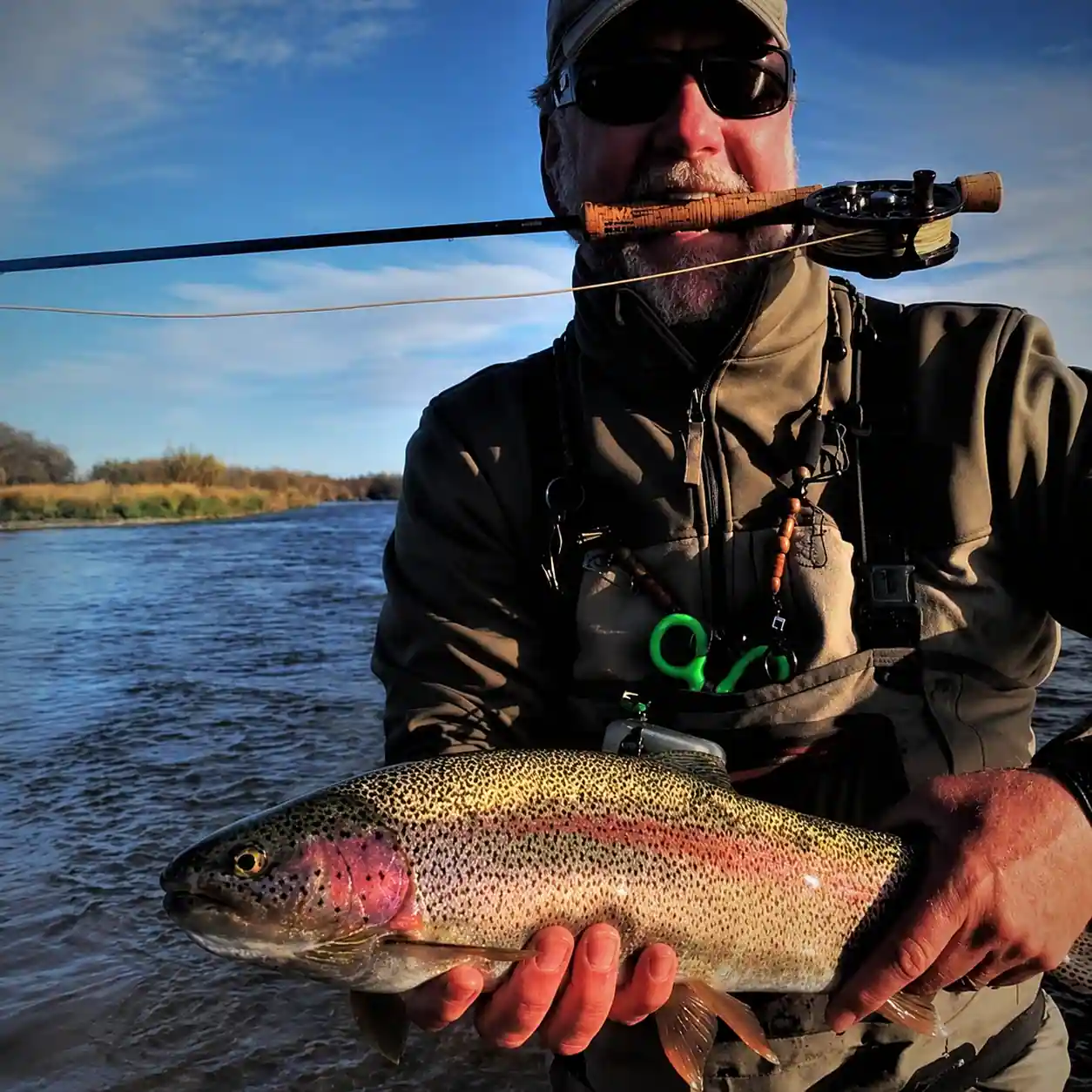
Mouse patterns along grassy banks can produce unforgettable strikes. Dry flies and streamers are both in play. The rivers feel alive, and every bend seems to offer another opportunity. But here’s something I’ve learned over the years — people rarely remember exactly how many fish they caught.
They remember the one that exploded on a mouse fly while everyone watched. They remember laughing so hard around camp that dinner took twice as long. They remember watching a bear feed across the river while nobody said a word. They remember the quiet.
Aggressive fish. Rainbows haven’t settled into the fall pattern of holding behind salmon for eggs — they’re roaming, and they’ll move a long way to eat.
Mouse water. Voles and shrews wash into the river all summer. A mouse pattern swung tight to a grass bank can trigger a strike with nothing subtle about it.
Long daylight. Close to twenty hours of usable light means no urgency, no rush, and an evening rise that belongs entirely to camp.
What Stays With You
One evening each trip, after dinner is finished and the dishes are put away, someone usually pours another cup of coffee.
Waders are hanging to dry. The day’s stories start getting better with each retelling. There’s still enough daylight that nobody feels any urgency to crawl into a tent. Those evenings are every bit as memorable as the fishing. Maybe more.
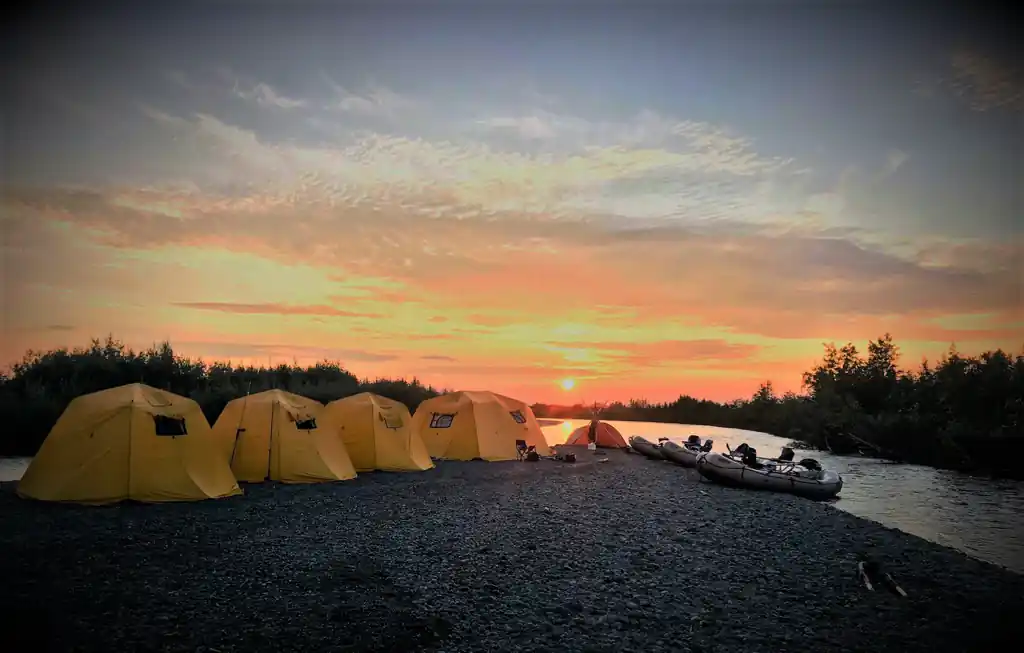
That’s what keeps bringing many of our guests back. The trout are certainly part of the story, and they’re an incredible part. But they’re only one chapter. The friendships. The shared meals. The wildlife. The endless Alaska daylight. The feeling of floating through country that few people will ever experience. That’s what stays with you.
After thirty-plus seasons, I still find myself looking forward to that first week in July. Not because I wonder if the fishing will be good — I already know it will be.
I look forward to watching another group of anglers slow down, settle into the rhythm of the river, and discover that some of the best moments of the week happen when nobody is even holding a fly rod. That’s when I know they’re beginning to experience Alaska the way I’ve been fortunate enough to experience it for more than three decades.
And that’s why, after all these years, early July still gets me excited.
About Paul Hansen
Thirty-plus years on these rivers. The same standards. The same commitment to doing it right.
The Operation Behind the Float
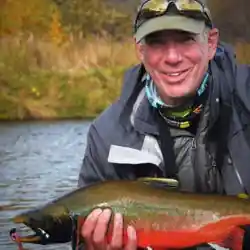
I started Alaska Rainbow Adventures in 1993. I hold competitively awarded USFWS Special Use Permits for the Kanektok, Goodnews, Arolik, and Togiak rivers in the Togiak National Wildlife Refuge, and NPS permits for the Alagnak River and Moraine Creek in Katmai National Preserve.
I run a tight operation. Maximum 8 guests. Professional guides who know these rivers. No compromises on camp quality or safety. When you contact me, I respond personally. Not a booking form. Not a sales team. Me — Paul Hansen — the person who will be on the river with you.
Paul Hansen — Owner/Operator, Alaska Rainbow Adventures
info@akrainbow.com · (907) 357-0251 Voice Only
Keep Reading
If this piece speaks to why early July stays with people, these pages help with the practical side of planning.
Kanektok River Trips — five July departures built around exactly this kind of fishing.
Best Time for an Alaska Float Trip — how the season changes from early summer through fall.
Why People Finally Go to Alaska — on the moment Alaska starts tugging at people, and why they stop talking and start going.
Come Find Out for Yourself
Five permitted July departures on the Kanektok, plus early-season windows on the Alagnak and beyond. Tell Paul your target species, preferred timing, and group size — he’ll give you a straight answer on which river and which trip makes the most sense.
Participation requires acceptance of our Terms, Conditions & Liability Agreement.