The Moment It Starts
A photograph of moving water holds your attention a little too long. A memory from a past trip surfaces with the clarity of something that happened yesterday. You find yourself counting weeks on a calendar without knowing what you’re counting toward. It’s subtle, but it’s real. And once it starts, it doesn’t let go.
People always imagine they have more time. They talk about doing a float trip “one of these summers,” as if the rivers will wait politely for them to be ready. But seasons move the way water does—steady, indifferent, unstoppable. One becomes three. Three becomes seven. And suddenly the friends who once talked about Alaska like it was a promise are comparing surgeries instead of maps. It happens quietly, then all at once.
One summer becomes three. Three becomes seven. The friends who once talked about Alaska like it was a promise are comparing surgeries instead of maps.
And then there are the others—the ones who finally stop talking and start going. They’re the ones who step off the floatplane at the end of the week already thinking about the next one. Because once you’ve lived a week on a real Alaska river, the kind with no roads and no noise and no schedule except daylight and weather, something in you shifts. You remember what it feels like to wake up to moving water instead of alarms. You remember what it feels like to be small in a way that makes you feel more alive, not less.
Something Shifts Around Day Three
It doesn’t happen on the first day. Usually not the second. But somewhere around day three or four, people stop checking the time.
Meals happen when camp settles. Fishing happens until the light fades. The river becomes the schedule. And that’s usually when the trip stops feeling like a trip and starts feeling like something you’ve been missing without realizing it.
There are no departure schedules on a wilderness float. No lodge boat pulling back to the dock at four o’clock. The morning mouse water is yours for as long as you want it. The evening rise belongs to the camp, not a rotation board. When a pod of sockeye stacks in a run ahead of you, you fish it until it’s done, not until someone else needs the drift boat.
That’s what a real wilderness float gives you that nothing else does: the river on its own terms. And once you’ve had a week of that, it’s hard to go back to anything less.
Schedule. A lodge week runs on departure times. A wilderness float runs on daylight and weather. If the fishing is good at 9pm, you keep fishing.
Pressure. Lodge boats share high-traffic beats. On a float, your group covers 70–90 miles of river. The fish in the morning section haven’t seen a fly. In most cases, they haven’t seen anything all season.
Pace. A lodge rotates guests through the same stretches. A float moves you to entirely new water every day of the trip. Fresh salmon. Fresh trout. A different river every morning, even though it’s the same river.
Every Season, the Rivers Fall Into Their Own Rhythm
Each river has its own character, its own window, its own kind of fishing. Choosing the right one is a conversation—one Paul is happy to have before you book anything.
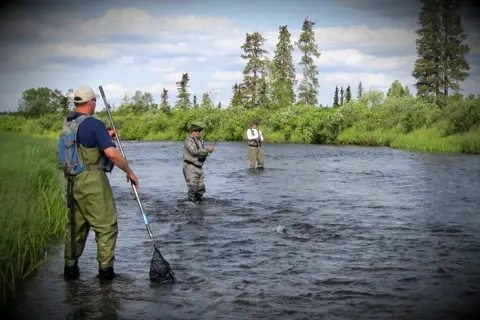
The Alagnak wakes first. Early July brings sockeye in bright, pulsing waves, trout sliding behind them like shadows with intent. The river feels electric—alive in a way that’s hard to describe without being there. It’s loud fishing, full of color and movement, the kind of week where you feel the river in your chest as much as your hands.
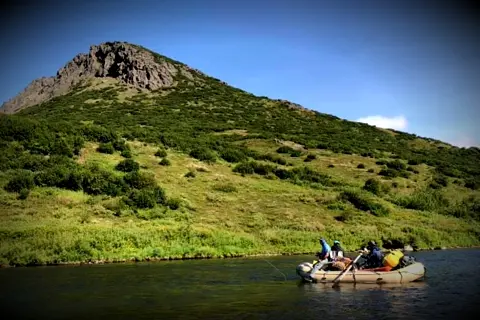
Then the season shifts into the Kanektok, where July and August belong to the surface. Mousing here is its own language—long drifts along cutbanks, the whisper of grass against the line, the sudden violence of a trout exploding from nowhere. Some days they miss three times before finally committing. Some days they hit so hard you swear the river is laughing at you.
And even when the fishing slows, the place itself carries you. The Kanektok feels like a river with a pulse. Five July trips run every season. It’s the most scheduled river in the program, and the one most people point to when they talk about what Alaska is supposed to look like.
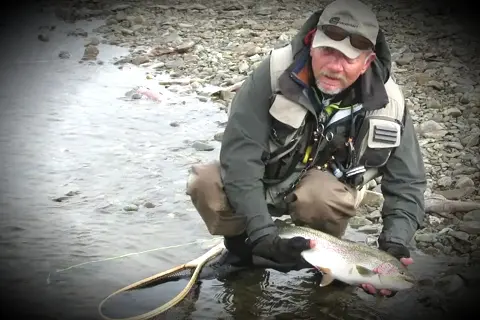
By mid-season, the light changes and Moraine Creek becomes something else entirely. The sockeye spawn turns the riverbed into a mosaic of reds and golds, and the trout—big, heavy, wild fish—move through water so clear it feels like they’re suspended in air.
People who haven’t seen Moraine don’t believe the stories until they’re standing there watching a fish the size of their forearm glide through ankle-deep water like it owns the place. It’s intimate, almost reverent.
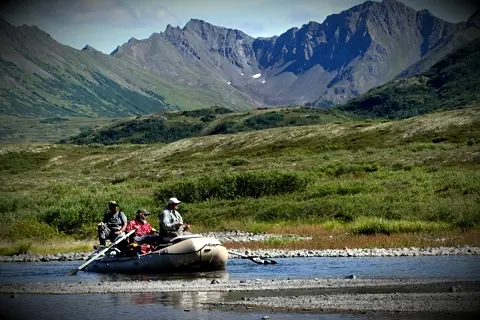
Then the chrome arrives and the Goodnews wakes up. Fresh coho push upriver, bright and silver and full of fight. Trout stack behind salmon. Dollies flash like sparks in the shallows.
The Goodnews is quieter than the Kanektok, more tucked away, more personal. It’s the kind of river that settles into you slowly—and stays with you the same way.
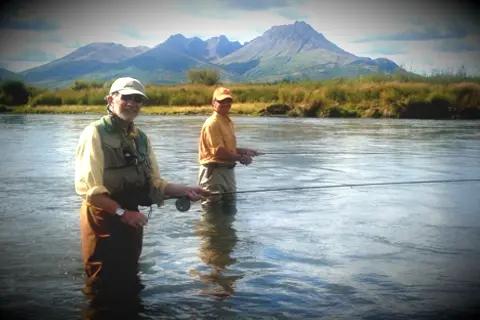
Some seasons, the Togiak steps back into view—a river that’s always been better than people give it credit for. Big country. Strong trout. Strong salmon. Almost no sense of crowding. It still feels like Alaska in the old way, the way people imagine it before they ever see it.
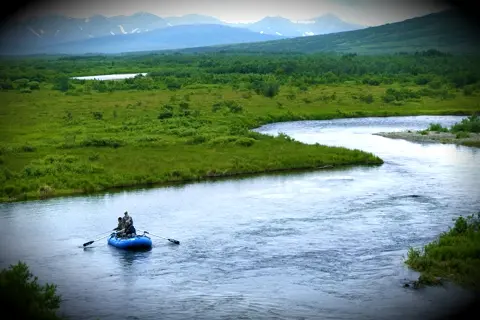
Then there’s the Arolik, the quiet outlier. Limited access, small groups, tight logistics, and trips that have to be coordinated before they can be confirmed. It is not a river we force onto a fixed calendar. It is a river we look at when the interest, timing, air service, and access realities all line up.
For the right group, that is part of the appeal. The Arolik rewards people who plan ahead, understand that rare access comes with more moving parts, and want something smaller, quieter, and more intimate than a standard scheduled float.
The kind of place where silence feels full instead of empty. The kind of place where you start noticing bird sounds again because there’s nothing else competing for your attention.
Why These Places Stay Wild
None of this is marketing. It’s simply how these rivers work—and why the people who go tend to come home feeling like they got something they couldn’t have found anywhere else.
Alaska Rainbow Adventures runs small groups, maintains a true 2:1 guest-to-guide ratio, and operates under limited USFWS and National Park Service permit structures that intentionally keep these rivers from becoming crowded. Most of these rivers only allow a handful of launches each season. Some stretches of water can only be accessed by people who know how to move through them the right way.
The permits—competitively awarded USFWS Special Use Permits for the Kanektok, Goodnews, Arolik, and Togiak rivers in the Togiak National Wildlife Refuge, and NPS permits for the Alagnak and Moraine Creek in Katmai National Preserve—represent more than 30 years of operating professionally in some of the most demanding wilderness in Alaska. They are not available to new operators. They are not transferable. They represent a finite number of launches on some of the most productive and least-pressured salmon and trout water in the world.
The seasons ahead are already taking shape. Some of these weeks will disappear faster than people expect.
And whether it’s the trip you’ve been thinking about for years, or the one you didn’t realize you needed until now, the rivers will still be there—moving through the country the same way they always have.
Waiting for the people willing to finally go.
About Paul Hansen
Thirty-plus years on these rivers. The same standards. The same commitment to doing it right.
The Operation Behind the Float
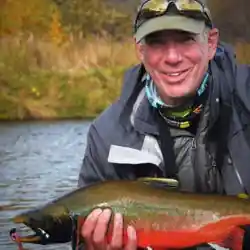
I started Alaska Rainbow Adventures in 1993. I hold competitively awarded USFWS Special Use Permits for the Kanektok, Goodnews, Arolik, and Togiak rivers in the Togiak National Wildlife Refuge, and NPS permits for the Alagnak River and Moraine Creek in Katmai National Preserve. These permits represent over 30 years of operating professionally in some of the most demanding wilderness in Alaska.
I run a tight operation. Maximum 8 guests. Professional guides who know these rivers. No compromises on camp quality or safety. If I have open space on a trip that fits your schedule, I will tell you. If a different river or a different timing window makes more sense for what you are trying to accomplish, I will tell you that too.
When you contact me, I respond personally. Not a booking form. Not a sales team. Me — Paul Hansen — the person who will be on the river with you.
Paul Hansen — Owner/Operator, Alaska Rainbow Adventures
info@akrainbow.com · (907) 357-0251 Voice Only
Keep Planning
If this page speaks to why people finally decide to go, these planning pages help narrow down when to go, which river fits, and what kind of Alaska float trip makes the most sense.
Best Time for an Alaska Float Trip — how the Kanektok, Goodnews, and Togiak change from early summer through fall.
Which River? — a practical guide to matching your group with the right Alaska river.
Goodnews vs. Kanektok — a closer look at two classic Southwest Alaska float trips.
Alaska Fishing Trips — a broader overview of the species, rivers, seasons, and float trip experience.
Ready to Stop Talking and Start Going?
Six permitted river systems. Fly-in access only. Small groups, serious guides, and the kind of fishing that’s harder to find every year. Tell Paul your target species, preferred timing, and group size—he’ll give you a straight answer on which river and which trip makes the most sense.
Participation requires acceptance of our Terms, Conditions & Liability Agreement.