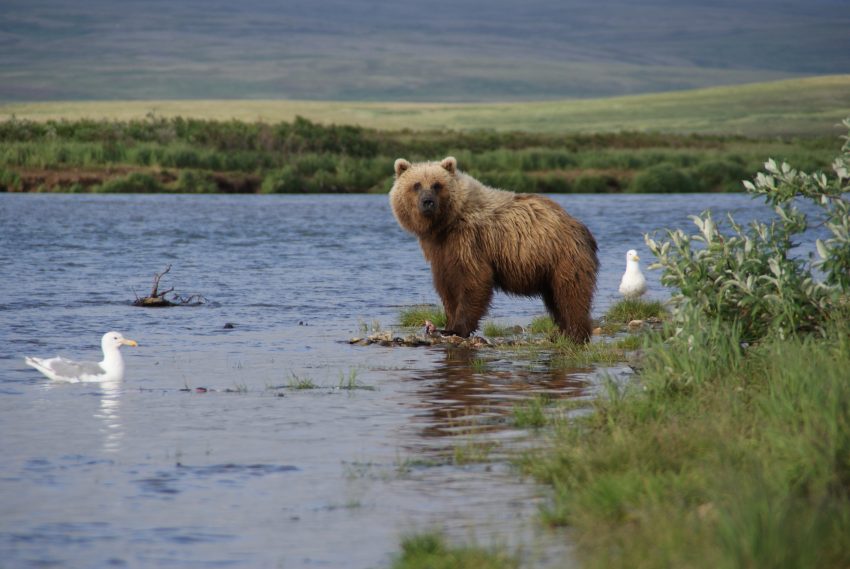
There are places in Alaska where you go looking for brown bears. On Moraine Creek in August, you are entering a landscape the bears are already using for exactly the same reason the Rainbow Trout are there: Sockeye Salmon.
Moraine and nearby Funnel Creek lie in Katmai National Preserve, far from Alaska’s road system. By mid- to late summer, spawning Sockeye have reached these clear tundra streams after their long migration inland. The salmon bring another seasonal arrival with them — brown bears.
For most visitors, seeing this part of Katmai means flying in for the day, spending several hours in the field, and flying back out.
Alaska Rainbow Adventures offers another way to experience it: spend multiple days in the Moraine Creek country.
Instead of trying to fit the experience into a single aircraft window, a multi-day wilderness expedition puts you in the field for several days, with camp, guides and the time to experience Moraine Creek as conditions change.
For photographers and wildlife-focused groups, that difference can matter as much as the destination itself.
Why Brown Bears Gather at Moraine and Funnel Creeks
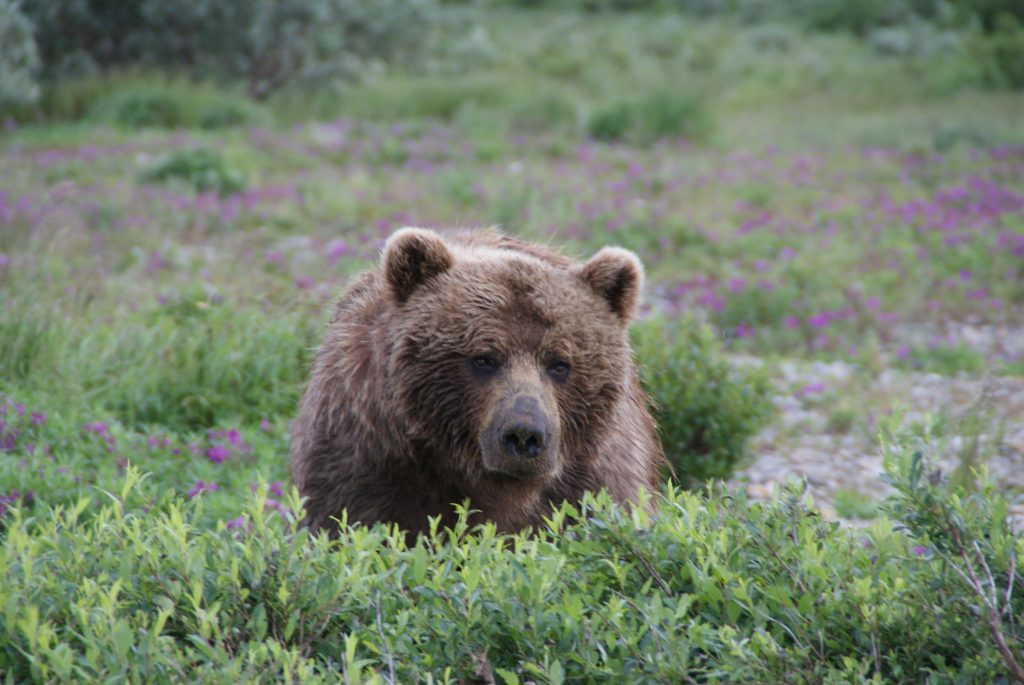
The bears are here because the salmon are here.
Sockeye Salmon returning to this part of Katmai travel approximately 100 miles through the Alagnak River and Kukaklek Lake system before reaching the Moraine and Funnel Creek area. By August, spawning salmon provide a concentrated seasonal food source for brown bears.
The National Park Service specifically identifies Moraine and Funnel Creeks as an important mid- to late-summer bear-viewing area and has documented a significant concentration of brown bears around the two creeks during August.
It is also an extraordinary landscape.
Moraine Creek cuts through an open, glacially formed tundra environment of rolling hills, exposed ridges, low vegetation and clear water. Bears may be seen fishing for salmon, traveling the creek corridors, crossing the tundra or simply disappearing into the landscape.
Nothing is staged, and nothing is guaranteed.
These are wild bears moving through wild country according to food, weather, other bears and their own behavior.
That’s precisely the point.
Funnel Creek: One of the Most Memorable Parts of the Experience
Moraine Creek and Funnel Creek are closely connected, and Funnel Creek can be one of the highlights of the trip.
One of our guests on the August 12–18, 2026 Moraine Creek expedition, Steve Chao, had traveled with Alaska Rainbow Adventures many times before. Fishing conditions during that trip were difficult. Water was unusually low, winds exceeded 30 mph at times, and the fishing ranged from poor to fair.
Yet when we asked Steve what he remembered most, it wasn’t a fish.
“The hike up Funnel Creek is always fun and the most memorable. This time around, we encountered more bears than normally seen in that area.”
— Steve Chao, Moraine Creek, August 2026
Steve rated his overall experience 8/10, guide professionalism 9/10, said the trip exceeded his expectations and gave Alaska Rainbow Adventures a 10/10 likelihood of recommendation.
His explanation was simple:
“I’ve been on many of Paul’s trips. I know the fishing can’t be controlled. But his operations are always top notch.”
— Steve Chao, returning Alaska Rainbow Adventures guest
That’s a useful description of Moraine Creek because conditions are never completely predictable. The fish don’t follow a schedule. Neither do the bears. Neither does Southwest Alaska weather.
A wilderness trip has to work with what the country gives you.
A Different Kind of Moraine Creek Bear-Viewing Trip
There are excellent guides and lodges offering fly-in bear-viewing trips throughout Katmai.
Our approach is different.
We don’t have to fly to Moraine Creek each morning and leave again that afternoon. We’re already there.
A multi-day Moraine Creek expedition is based in the field. Depending on the specific itinerary, group and conditions, we establish wilderness camps and spend successive days traveling through and experiencing the creek.
That doesn’t mean we promise more bears.
It doesn’t mean closer bears.
And it certainly doesn’t mean bears perform on schedule.
What it gives us is something much more useful: time.
If the light is poor at noon, there is another afternoon. If weather changes, the landscape changes with it. If bear activity is quiet for several hours, the entire Moraine Creek experience hasn’t been reduced to those several hours.
And if an extraordinary photographic opportunity develops while you’re already in the field, you are not necessarily looking at your watch because an airplane has to take you back to a lodge.
Why Multiple Days Matter for Wildlife Photography
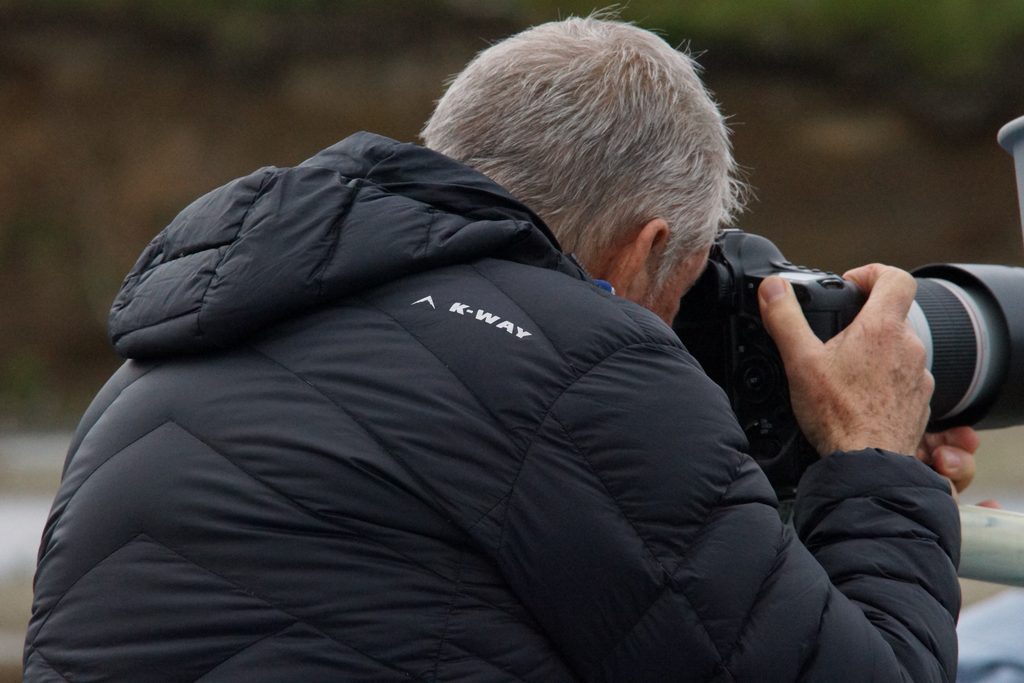
Anyone serious about wildlife photography understands the problem with scheduling wildlife.
You can’t.
Light changes. Weather changes. Animals move. A location that seems empty can become active later in the day, while an area full of bears one afternoon may be quiet the next morning.
Katmai adds another variable: aviation.
Aircraft are essential to accessing Moraine Creek. There are no roads into this country. But weather, wind and visibility can affect when aircraft can safely operate.
A single-day visit necessarily compresses the experience into the time available between arrival and departure. A multi-day expedition changes that equation.
Once the group is established in the field, the emphasis can shift from transportation to observation.
For photographers, that can mean:
- Multiple opportunities instead of one viewing window.
- Changing morning and evening light.
- Time to observe bear behavior rather than simply photograph the first bear encountered.
- Opportunities to photograph bears within the larger Katmai landscape.
- Time for salmon, tundra, weather, mountains and other wildlife.
- The ability to adjust the day’s priorities to actual conditions.
The goal isn’t to get closer.
The goal is to have enough time that you don’t need to force the experience.
More Than Bear Portraits
A Moraine Creek photography expedition shouldn’t be thought of simply as an opportunity to fill memory cards with close photographs of brown bears.
The setting is part of the story.
Moraine Creek lies in open tundra country shaped by glaciers. Clear streams cut through broad valleys and old glacial deposits. Sockeye turn red as they prepare to spawn. Rainbow Trout hold behind them. Bears move between water and tundra. Weather can transform the appearance of the landscape in minutes.
Some of the strongest photographs from this country aren’t tight bear portraits at all. They’re photographs showing a bear in a creek full of salmon, a bear crossing open tundra, the scale of an animal against the surrounding hills, changing weather over Katmai, camp in the evening, or people traveling through a landscape where humans are very clearly visitors.
For photographers, staying in the field creates the opportunity to tell that larger story.
Bear Viewing Means Giving Bears Space
Spending more time around bears does not mean attempting to get closer to them.
Katmai’s regulations and bear-viewing practices are designed to protect both bears and visitors.
Visitors may not approach within 50 yards of a bear or other large mammal. Visitors also may not remain within 50 yards of a bear using a concentrated food source such as spawning salmon.
Bear movement and feeding always take priority.
If a bear needs the water you’re fishing, photographing or walking beside, the bear gets the water. If a bear’s behavior indicates that our presence is affecting it, we change ours.
The objective is to observe wild bears behaving naturally — not to manipulate an encounter for a photograph.
Camping in Moraine Creek Bear Country
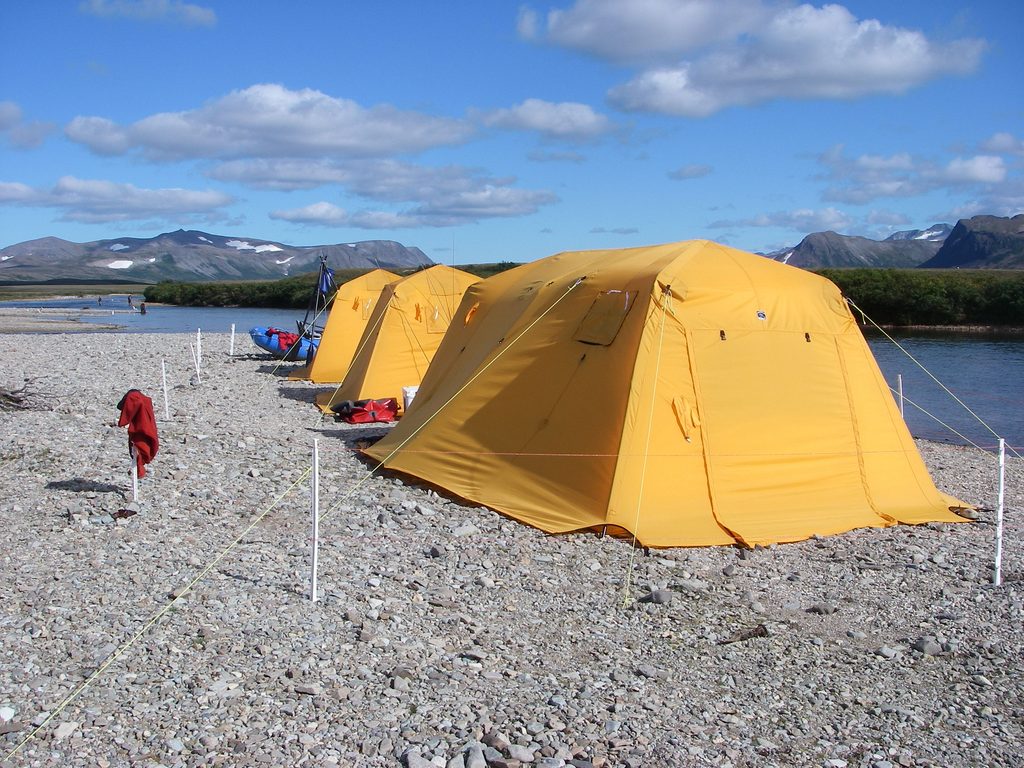
Camping in this country requires another level of awareness.
The National Park Service prohibits camping within one-half mile upstream and downstream of the confluence of Moraine and Funnel Creeks between July 1 and August 31. The closure exists specifically to reduce conflicts between bears and people around this important feeding area.
Alaska Rainbow Adventures plans camps around applicable National Park Service regulations and actual field conditions.
Our wilderness camps use electric-fence protection, and bear-aware camp practices are part of operating in Katmai.
Food, scented items, cooking, camp organization and movement around camp all matter.
The idea isn’t to create a fortress in bear country. It’s to operate predictably and responsibly in a place where bears live.
What a Photography-Focused Expedition Looks Like
A dedicated photography expedition is not simply one of our fishing trips where everyone happens to bring a camera.
We can structure the trip differently.
A private photography group may place greater emphasis on field time, bear activity, changing light and the ability to remain at productive observation areas.
Guide positioning, transportation, camp strategy and equipment requirements can therefore differ from our normal fishing program.
That’s why we price photography-focused expeditions separately rather than pretending every group requires exactly the same logistics.
When discussing a photography trip with us, the useful questions are:
- How many photographers are coming?
- How many nights do you want in the field?
- Is brown bear photography the primary objective?
- Do members of the group also want to fish?
- How much camera equipment will the group bring?
- Are you organizing a private group, photography workshop or wildlife tour?
From there, we can determine what is practical.
Can You Combine Bear Photography and Fishing?
Absolutely.
In fact, Moraine Creek is unusually well suited to it because the fishing and bear activity originate from the same ecological event.
The Sockeye arrive to spawn. Rainbow Trout move into feeding positions behind the salmon. Brown bears come to feed on the salmon.
For an angler carrying a camera — or a group containing both serious anglers and serious photographers — the two experiences fit together naturally.
But we can also build an expedition where photography is the primary purpose and fishing is secondary.
That’s an important distinction. Not everybody who wants to experience Moraine Creek needs to be an angler.
When Is the Best Time for Bear Viewing on Moraine Creek?
For the combination of brown bears, spawning Sockeye and Moraine Creek’s famous Rainbow Trout fishery, August is the critical window.
The National Park Service describes Moraine and Funnel Creeks as an area where the arrival of salmon in mid- to late summer attracts an abundance of bears.
Individual years vary. Salmon timing changes. Water levels change. Weather changes. Bear distribution changes.
There is no honest way to guarantee how many bears someone will see on a particular day.
What we can do is operate during the seasonal window when the ecological pieces normally come together and give a multi-day group enough time in the field to experience what actually happens.
Getting to Moraine Creek
Moraine Creek is remote. There is no road access.
Our trips begin and end in King Salmon, Alaska, with air transportation into the Katmai backcountry.
That remoteness is part of what makes the experience extraordinary, but it also means weather and aviation conditions are real considerations.
Flight schedules can change. Weather delays happen. Wind can affect aircraft operations. Wilderness travel requires flexibility.
Anyone considering a trip into this country should understand that uncertainty isn’t a flaw in the experience. It’s part of traveling in remote Alaska.
Moraine Creek Is Not a Zoo
That may sound obvious, but it’s worth saying.
There are no platforms controlling where the animals appear. There is no feeding schedule. There is no guarantee that a bear will stand in perfect light with a salmon in its mouth.
Some days are extraordinary. Other days require patience. The same bear may behave differently from one hour to the next.
That’s wildlife photography.
And it’s one of the reasons we think time in the field is more valuable than trying to manufacture an encounter.
Plan a Private Multi-Day Moraine Creek Bear-Viewing & Photography Expedition
Alaska Rainbow Adventures has operated remote wilderness float trips in Southwest Alaska since 1993, and we hold National Park Service authorization for our operations in Katmai National Preserve.
Our Moraine Creek program can be structured as a fishing-focused wilderness trip, a private bear-viewing and photography expedition, or a combination of the two.
Photography expeditions are planned and priced separately because trip length, group size, guide positioning, transportation, equipment and camp logistics can differ significantly from a standard fishing trip.
If you’re considering Moraine Creek primarily for brown bear viewing or wildlife photography, tell us what you’re trying to accomplish. We’ll tell you what makes sense.
Explore our Moraine Creek fishing trips and wilderness expeditions: https://akrainbow.com/moraine-creek-fishing-trip.html
Or contact Paul Hansen directly to discuss a private photography-focused trip.
About the Moraine Creek Bear Population
The National Park Service identifies Katmai National Park and Preserve as one of the world’s premier brown bear viewing areas and estimates approximately 2,200 brown bears inhabit the park and preserve. NPS specifically identifies Moraine and Funnel Creeks as important mid- to late-summer bear habitat where spawning salmon attract bears.
For current regulations, bear-safety requirements and backcountry information, visitors should consult the National Park Service’s Katmai National Park & Preserve guidance before traveling.