Spend any time on the Kanektok, Goodnews, or Arolik and you’re going to meet Dolly Varden. They’re in every piece of good water, they’ll eat just about anything, and they keep rods bent from mid-July through September. They’re not trout — they’re char — but out here that distinction doesn’t matter. What matters is they’re aggressive, they’re reliable, and they don’t quit. And when the rainbows get all the attention, these are the fish that quietly make sure you’re tight all day.
A Char Worth Knowing
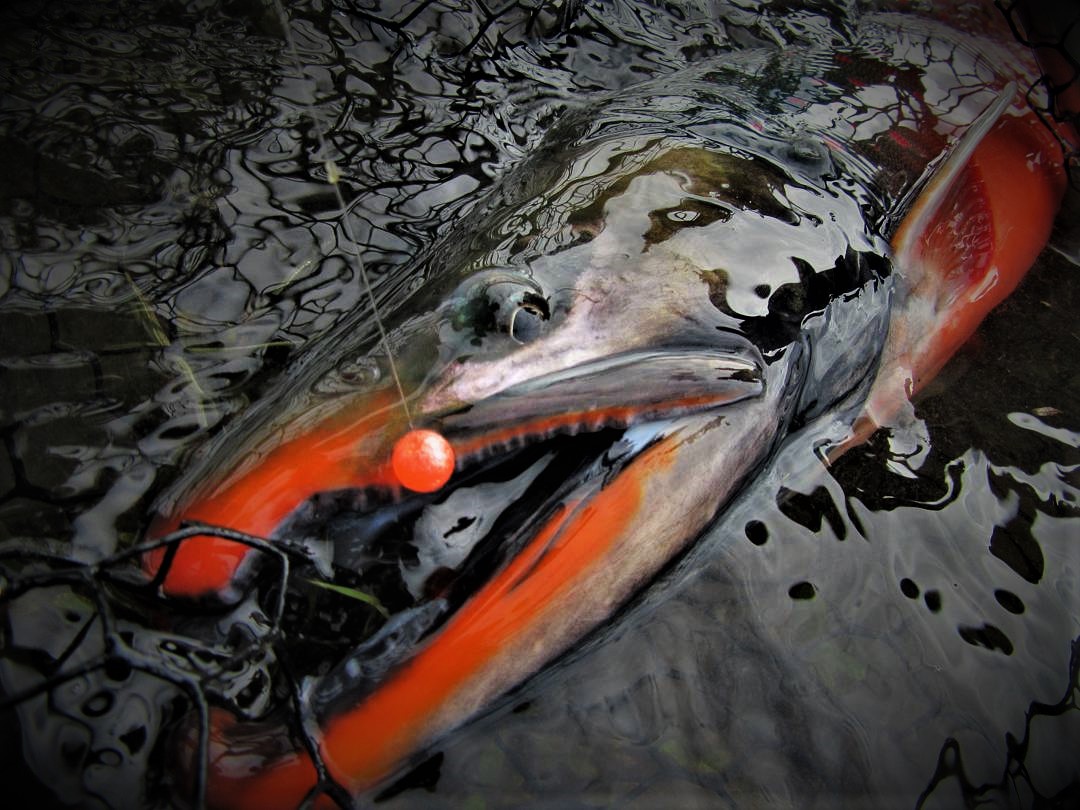
The name comes from a Charles Dickens character known for bright, spotted dresses — which fits. Early in the season they’re chrome and solid, fresh from the salt. By September they look completely different: fire-orange bellies, hooked jaws on the males, colors that don’t look real. People assume the photos are edited. They’re not. It’s the kind of fish that surprises people — both in how they look and how hard they pull. Most anglers end up remembering them as the fish that crushed the bead before the rainbow could get there. That’s about right.
How They Feed
Dollies are opportunists. Eggs, flesh, juvenile salmon, sculpins, leeches — if it moves or drifts, they’ll eat it. They’re not picky, but they are locked into whatever’s happening in the moment. When salmon are spawning, it’s eggs. When fish start to break down, it’s flesh. Find the food and you’ll find the Dollies. On these rivers, that usually means you’re never far from action.
Season: Mid-July Through September
Mid-July is the first push. Fish show up bright and aggressive, riding in behind kings, chums, and sockeye. Small beads — 6–8mm — get eaten immediately, every bend holds fish, and they’re looking up. This is where trips start to feel busy, in a good way.
Late July into August is peak. Salmon are spawning hard and Dollies stack up behind redds in numbers that don’t make much sense until you see it. Fishing gets steady — almost automatic. It’s also when a lot of anglers realize they’re not just here for one species.
September is full fall mode. Males develop kypes, bellies turn deep orange, and flesh becomes a major food source as salmon break down. Beads bump up to 8–10mm and mottled colors start to matter. This is the best mix of color, size, and attitude — and a big part of why fall trips book early.
Where They Stack
They’re not random. Look below salmon redds, inside bends with walking-speed water, on gravel shelves, and at the drop-offs at the tail of spawning flats. Midday, they’ll slide into deeper buckets. Side channels with clean gravel hold fish all season. If you hook one, don’t move on too fast — there are usually more. A lot more.
Gear
A 6-weight covers most situations; a 7-weight helps with heavier rigs or deeper water. Run 0X–2X fluorocarbon for beads, 1X–3X for streamers, and shorten up to 3–5 feet when fishing flesh in heavier current. Match bead color to the spawn: lighter peaches early with sockeye, shifting toward oranges and mottled tones as the season moves into chums and kings. Streamers stay simple — olive/white, black/olive, sculpin patterns. We’ll have what you need dialed when you get here.
Size and Fight
Most fish fall in the 12–18 inch range with plenty in the low 20s, and anything pushing 25 inches is a real fish. They don’t jump much, but they’re strong, they use current well, and they stay on the gas. They’re also the fish that keep the day rolling — no long dry spells, no waiting around. Just steady pulls and bent rods.
Handle Them Right
Dolly Varden matter out here. They’re part of the whole system — eating eggs and flesh, moving nutrients, keeping things cycling. These rivers are as healthy as they are because they’re treated that way. Keep fish in the water, pinch your barbs, don’t drag them across gravel. Quick photo, then let them go.
A lot of people come up here thinking about one fish. Then they spend a week on these rivers and realize it’s the mix — the way everything overlaps — that makes it what it is. Dollies are a big part of that. They keep the rod bent, they show up in numbers, and they turn good days into great ones.