What decades of Alaska wilderness experience have taught us about photographing bears in Katmai National Preserve.
There is a moment on almost every wilderness trip when people begin to appreciate just how far they’ve traveled from the familiar world.
For visitors to Moraine Creek, that realization may come during the flight into Katmai National Preserve, looking down at a landscape of mountains, tundra, lakes, and winding streams with few visible signs of human activity.
Or it may come later, standing beside a salmon stream and watching a brown bear go about its business, apparently unconcerned with the fact that you’ve traveled thousands of miles for the opportunity to photograph it.
This is what makes Alaska wildlife photography different.
You’re not visiting a zoo, working from a roadside viewing platform, or attending an event where the subjects arrive on schedule.
You’re entering the animals’ world.
And the more you understand about that world before arriving, the more rewarding the experience can be.
At Alaska Rainbow Adventures, we’ve been organizing and guiding remote wilderness expeditions since 1993. We’ve learned that successful trips depend on considerably more than equipment. Understanding the country, respecting its limitations, and arriving with realistic expectations matter just as much.
Our Moraine Creek bear photography expeditions are designed around those principles.
Here are some things worth knowing before you travel.
First, Understand Where You’re Going
Moraine Creek lies within Katmai National Preserve, in a region known for its wild brown bears and productive salmon waters.
The landscape is beautiful, but it is also remote.
There are no roads leading to our camp, no nearby stores, and no convenient way to replace forgotten equipment once the expedition begins.
Access is by aircraft from King Salmon, Alaska.
The flight is part of the experience, but it also introduces one of the realities of wilderness travel: weather determines when aircraft can safely operate.
Conditions at King Salmon, Anchorage, or another airport may be entirely different from those at a remote landing location.
Poor visibility, wind, and other weather conditions can affect flight schedules.
For that reason, we encourage guests to allow flexibility in their travel plans, especially when arranging flights home after the expedition.
The ability to adapt to conditions is part of traveling in remote Alaska.
It’s also part of what makes the experience special.
Moraine Creek Is More Than a Single Bear-Viewing Location
One of the reasons we find Moraine Creek so appealing is the variety of environments associated with the creek and its surrounding landscape.
Bears may be encountered along salmon streams, on gravel bars, moving through vegetation, or traveling between different areas.
Each setting presents different photographic possibilities.
A bear standing in shallow water can produce an entirely different image from the same animal moving through open tundra or appearing against a distant mountain backdrop.
Our guides visit established bear-viewing areas and, when conditions permit, explore less frequently visited sections of Moraine Creek.
This approach can provide opportunities for different perspectives rather than repeatedly photographing from one location.
However, access depends on water levels, terrain, wildlife activity, applicable requirements, and the guides’ judgment.
Not every location is appropriate on every day.
And the bears themselves ultimately determine where the interesting activity occurs.
Why We Ask Guests to Bring Waders
Exploring creekside environments sometimes requires walking through wet vegetation, crossing shallow water, or wading along suitable sections of the creek.
For that reason, we ask guests to bring chest waders and appropriate wading boots.
These can make additional areas accessible when conditions permit.
They also help keep guests comfortable in an environment where wet ground and water are part of the landscape.
Proper fit matters. We recommend becoming familiar with your waders and boots before the trip rather than using them for the first time in Alaska.
Waders do not make every crossing safe or every location accessible. Our guides evaluate water conditions and determine where the group can travel.
The objective is to reach suitable viewing locations safely, not to cover the greatest possible distance.
The Bears Set the Schedule
One of the most important things to understand about wildlife photography is that the animals have no interest in cooperating with photographers.
A bear may spend a long time resting before suddenly becoming active.
Several animals may appear along a stream within a relatively short period, or activity may be scattered across a much larger area.
Salmon movements, weather, water conditions, and interactions between bears can all influence what happens.
You might spend an hour watching a bear quietly feeding, only to have an unexpected interaction produce your favorite photographs of the entire expedition.
Or you might discover that the most interesting image isn’t an action photograph at all.
A bear standing motionless in mist, a mother watching her cubs, or an animal crossing a stream against the surrounding landscape can tell a remarkable story.
That’s why we encourage photographers to remain observant and flexible.
It’s easy to become so focused on obtaining one particular photograph that you overlook other opportunities.
The bears don’t follow our itinerary.
We adapt to theirs, within the limits of safe and responsible wildlife viewing.
Why We Stay for Several Days
A short bear-viewing excursion can be exciting, but it also places considerable importance on what happens during a limited period.
Wildlife activity, lighting, and weather may be favorable—or they may not.
Our Moraine Creek photography expedition is structured as a five-day, four-night experience, with approximately four days of photography opportunities.
Guests generally arrive in the Moraine Creek area around midday on the first day and depart around midday on the fifth day, subject to weather and aircraft schedules.
Spending several days in the area allows opportunities to observe wildlife under different conditions.
A location that offers little activity one day may be much more interesting the next.
Changing light can transform the appearance of the landscape.
And having additional time makes it easier to appreciate quieter wildlife behavior rather than concentrating exclusively on dramatic action.
There are never guarantees of particular sightings or photographic opportunities.
But time and flexibility are valuable advantages when working with unpredictable subjects.
A Wilderness Camp Designed Around the Experience
Alaska Rainbow Adventures is primarily known for guided wilderness float-fishing trips, where camps move downstream as an expedition progresses.
Our Moraine Creek photography trips operate differently.
We establish a stationary wilderness camp and return to the same location each evening.
This eliminates the daily process of breaking down and relocating camp and provides a consistent base for guests and their equipment.
For photographers, that arrangement has practical advantages.
Camera equipment can remain organized. Batteries can be charged. Photographs can be reviewed. And guests can return to familiar accommodations after spending time in the field.
Why We Use Substantial Expedition Tents
We’ve experienced enough Alaska weather over the years to appreciate the difference between lightweight recreational camping equipment and shelters built for demanding conditions.
Our Moraine Creek guest accommodations consist of Alaska-made, 10-by-10-foot Arctic Oven expedition tents.
Each provides approximately 100 square feet of sheltered space, with raised cots and high-quality inflatable mattresses.
The tents offer room for personal belongings and camera equipment in addition to sleeping accommodations.
Guests share tents on a double-occupancy basis, with single-occupancy accommodations available at an additional cost.
At the center of camp is a furnished 12-by-24-foot Arctic Oven dining and gathering tent.
This provides a sheltered place for meals, conversation, organizing camera equipment, and reviewing photographs on a laptop.
We provide quality meals and snacks and can accommodate dietary requirements where reasonably possible when discussed before booking.
The camp also includes a private portable toilet facility and an electric bear-deterrent perimeter fence.
The fence is an additional precaution, not a guarantee against wildlife encounters. Guests must continue to follow guide instructions and established bear-safety procedures.
Our intention isn’t to create a luxury resort in the wilderness.
It’s to provide a substantial, well-organized camp that allows guests to concentrate on the experience rather than the daily challenges of camp life.
The Practical Side of Photography in Remote Alaska
Photography equipment has changed enormously since we began operating Alaska wilderness trips in 1993.
Today’s cameras can capture extraordinary detail, track moving subjects, and produce thousands of photographs in a single day.
But those capabilities also introduce practical considerations.
High-speed shooting consumes storage space. Electronic viewfinders and sophisticated autofocus systems use battery power. Large telephoto lenses can be heavy and awkward to carry over uneven ground.
And expensive electronic equipment doesn’t necessarily appreciate prolonged exposure to Alaska rain.
The most useful camera system isn’t always the most elaborate one.
It’s the system you can carry, protect, and operate comfortably under the conditions you’re likely to encounter.
Equipment Weight Matters
The aircraft used to reach remote wilderness locations have baggage and payload limitations.
A large telephoto lens, multiple camera bodies, tripod, laptop, chargers, and other accessories can represent considerable weight before you’ve packed clothing and personal necessities.
If you’re bringing an unusually extensive photography kit, discuss it with us before departure.
We can evaluate practical baggage considerations and transportation arrangements.
It’s better to resolve those questions before arriving in King Salmon.
Keeping Equipment Working
Rain protection is important.
A camera or lens advertised as weather-resistant is not necessarily waterproof.
A suitable camera rain cover, protected camera backpack, and cleaning cloths are worthwhile additions to your equipment.
Bring enough memory cards and spare batteries for extended photography sessions.
If you intend to edit photographs during the expedition, make sure your laptop and software operate without internet access.
Check equipment before leaving home, including chargers, cables, memory cards, and any accessories specific to your camera system.
A missing cable may be a minor inconvenience at home.
At a remote wilderness camp, it can become a significant problem.
Electrical Power at Camp
Our stationary camp uses EcoFlow DELTA portable battery power stations to provide charging capability for camera batteries, laptops, phones, and other small electronic devices.
These battery-based systems operate quietly and produce no exhaust at the point of use.
They provide a practical way to support modern photography equipment without the constant noise of a conventional generator.
Available electrical capacity is limited, however.
Bring your own chargers and cables, along with spare batteries. Please discuss unusually high power requirements with us before departure.
For more detailed information about camera bodies, lenses, exposure settings, and equipment recommendations, see:
Cameras and Lenses for Photographing Alaska Brown Bears — What to Bring and Why
Being Comfortable Makes a Difference
Wildlife photography often involves waiting.
You may spend considerable time observing an animal before something particularly interesting happens.
Being cold, wet, or uncomfortable makes those periods much less enjoyable.
Moraine Creek’s weather can change quickly, and conditions may be wet even during the summer.
We recommend practical clothing that can accommodate changing temperatures, wind, and rain.
A layered clothing system, dependable waterproof jacket and pants, warm socks, and suitable gloves are useful.
Insect protection also deserves attention.
Mosquitoes and other biting insects can be bothersome during Alaska’s summer months. Repellent and a lightweight head net can make a substantial difference.
Beyond clothing, consider the physical demands of carrying camera equipment through uneven terrain.
Some outings may involve relatively easy walking, while others can require more effort.
We discuss mobility, physical abilities, and expectations with prospective guests before booking.
The goal is to make sure participants understand the experience and are appropriately prepared.
Respecting the Animals Comes First
The most compelling wildlife photographs usually show animals behaving naturally.
Bears fishing, traveling, resting, or interacting with one another provide extraordinary opportunities when their behavior isn’t being influenced by people attempting to approach them.
Our guides determine appropriate viewing locations and distances based on conditions and wildlife behavior.
Guests must remain with the group and follow their guides’ instructions.
Moving independently to obtain a different angle, approaching a bear for a closer photograph, or interfering with its natural behavior is not acceptable.
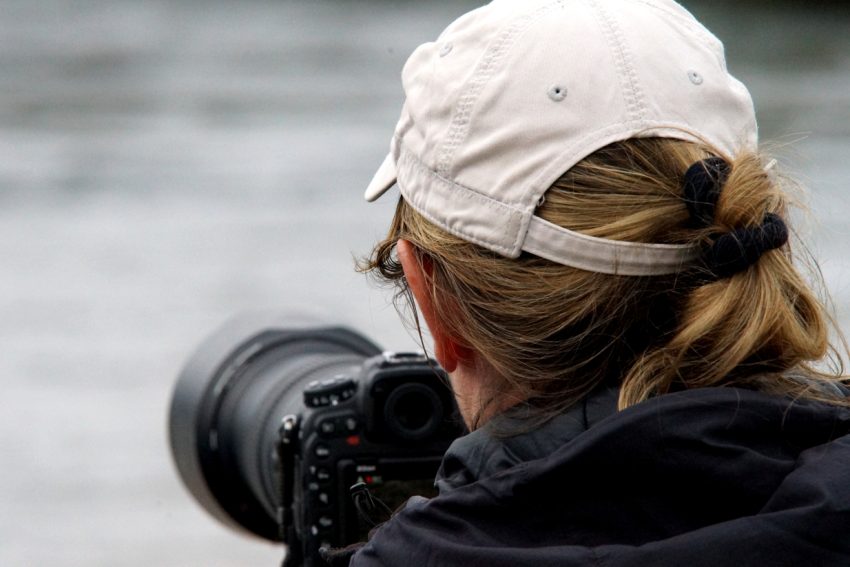
A telephoto lens provides the ability to photograph wildlife without unnecessarily closing the distance.
The safety of our guests and guides, along with respect for the animals, always takes precedence over obtaining a particular photograph.
Preparing for the Unexpected
Remote Alaska travel requires a degree of flexibility.
Weather may affect aircraft transportation. Water levels may change. Conditions may make certain viewing locations inaccessible.
Those realities are part of operating in the wilderness.
They’re also reasons to approach the expedition with reasonable expectations.
Alaska Rainbow Adventures requires trip insurance for all guests.
Coverage must address cancellations initiated by Alaska Rainbow Adventures because of weather, flooding, unsafe conditions, or other circumstances beyond our control, including situations where scheduled commercial airline flights remain operational.
Not all travel insurance policies cover these circumstances.
Guests should confirm the relevant coverage directly with their insurance provider before purchasing.
Travel medical coverage and emergency evacuation arrangements are additional considerations for a remote wilderness expedition.
Alaska Rainbow Adventures does not sell insurance or interpret insurance policy provisions. Guests are responsible for confirming that their coverage is appropriate.
A Few Conversations Before You Arrive
We prefer to speak personally with prospective guests about their interests and expectations before making arrangements.
That conversation helps us explain the experience and determine whether it is a good fit.
If you have questions about mobility, wading equipment, camera gear, electrical requirements, dietary needs, or transportation logistics, please bring them up before departure.
The same applies if you’re traveling with specialized photography equipment or have particular objectives for your time at Moraine Creek.
We’ve learned through decades of wilderness operations that good communication before a trip can prevent many avoidable problems afterward.
Our role is to manage the practical demands of the expedition so guests can concentrate on observing and photographing the remarkable wildlife and landscape of Katmai.
Remember Why You Came
There is something worth remembering when photographing wildlife in a place like Moraine Creek.
Not every extraordinary moment needs to become a photograph.
Sometimes the most memorable part of a wilderness trip is simply watching a bear quietly fishing along a stream, hearing the water moving over the gravel, or appreciating the enormous landscape surrounding you.
Photography gives us a reason to pay attention to details we might otherwise overlook.
But it can also become a distraction if we’re constantly looking through a viewfinder.
Take the photographs. Watch the light. Be patient.
And occasionally, lower the camera and enjoy where you are.
The experience of being in wild Alaska is every bit as valuable as the photographs you bring home.
Experience Moraine Creek with Alaska Rainbow Adventures
Alaska Rainbow Adventures offers guided brown bear viewing and photography expeditions in the Moraine Creek area of Katmai National Preserve.
Our five-day, four-night trips provide approximately four days of photography opportunities, with small groups limited to six guests and accommodations at a substantial stationary wilderness camp.
The $6,995 per-person rate, based on double occupancy, includes round-trip aircraft transportation from King Salmon, four nights of wilderness camp accommodations, meals, and professional guide services. Single-occupancy tents are available at an additional cost.
This is a guided wilderness bear-viewing and photography expedition, not a formal camera-instruction workshop.
For additional information about the experience, accommodations, and availability, visit our:
Moraine Creek Brown Bear Viewing & Photography Expeditions
Alaska Rainbow Adventures
Operating Alaska wilderness expeditions since 1993
907-357-0251 (voice)
info@akrainbow.com
https://akrainbow.com