Nobody sets an alarm out here.
You don’t need one. By the time the Alaskan morning light starts doing its thing — filtering gold through the tent walls — your brain is already online. You’re thinking about the run you passed yesterday. The seam behind that gravel bar where the big char were stacking. Whether the wind is going to cooperate.
This is what a day looks like on a Southwest Alaska wilderness float. No roads. No cell service. No crowds. Just the river, the fish, and the kind of silence that takes a few days to get used to.
First Light
Coffee, Camp, and Reading the River.
The First Conversation of Every Day.
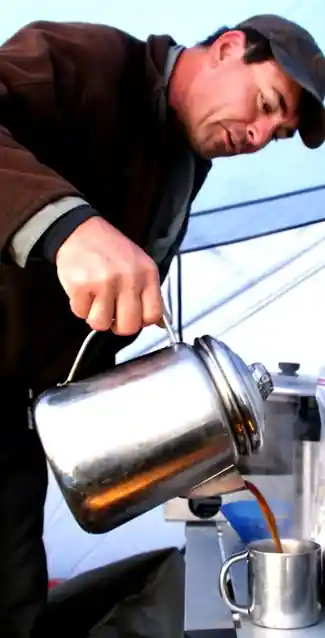
Camp comes alive quietly. The guides are usually up first — that’s just how it goes after 30-plus years of doing this. The coffee goes on. Someone checks the sky. In Southwest Alaska, the weather is always the first conversation of the day. Not in a nervous way — more the way a farmer checks the fields. You want to know what you’re working with. A low ceiling might push the fish shallow. A clear, bluebird morning on the Kanektok or the Goodnews can mean crystal-clear water and fish that can see you from twenty feet away.
You adjust. That’s the game.
Breakfast is real food. Eggs, bacon, pancakes, camp-coffee, the whole deal. You’re going to be on your feet, wading gravel bars, catching fish all day. You need fuel.
By the time the rafts are loaded and the rods are rigged, the river is already telling you things.
Morning:
The Best Hours on the Water
Before the Fish Have Seen a Fly.
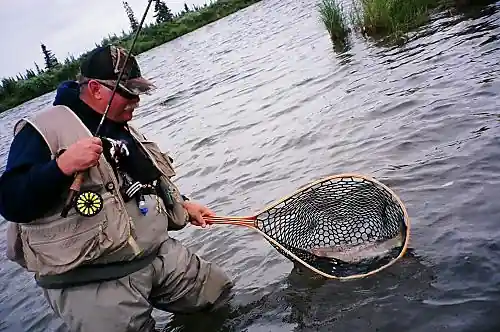
The first few hours of fishing are often the best. The light is low and angled, the fish haven’t seen a fly yet today, and everything feels possible.
On the rivers here in Southwest Alaska, mornings often mean rainbow trout and dolly varden — big ones, wild ones, fish that have never seen a hatchery truck. They hold in the classic spots: the tailouts, the edges of current seams, the soft water behind boulders. Your guide has floated this river enough times to know where “here” is before the raft even rounds the bend.
If it’s July and the conditions are right, someone’s going to throw a mouse.
There’s nothing in freshwater fishing quite like watching a 24-inch rainbow come up and eat a foam mouse pattern off the surface. When it happens, you don’t forget it — just don’t strike too soon.
The morning float covers water efficiently — stopping at the runs that earn a stop, rowing past water that looks good but fishes slow. This is where experience shows. A good guide doesn’t fish every riffle, he fishes the right ones.
Midday
Lunch on the Gravel Bar.
Miles from Anywhere.
Around noon, the raft slides onto a gravel bar, and suddenly it’s lunch. Here’s the thing about eating lunch in the middle of a Southwest Alaska wilderness river corridor: it’s absurd in the best possible way.
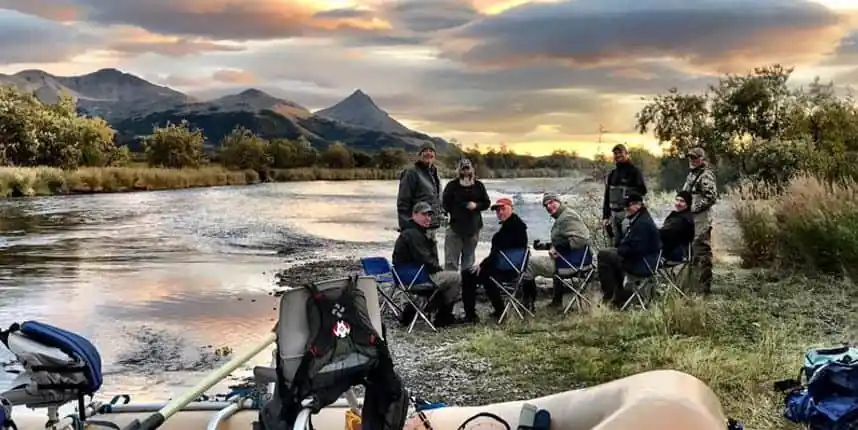
You’re sitting on a billion-year-old glacial deposit, surrounded by tundra rolling to the horizon, probably watching a brown bear work the far bank, eating a sandwich that tastes like the best sandwich you’ve ever had — because you earned it.
| › The fish that ate on the third cast |
| › The one that ate on the fortieth |
| › The enormous rainbow that rolled on the mouse and then just… didn’t eat. Those are the ones that haunt you. |
After lunch, sometimes the fishing slows for a while. That’s fine. This is also the time to just look around. The Togiak National Wildlife Refuge is one of the largest protected wilderness areas in the United States. Wolves, bears, moose, eagles, caribou — this is their address. You’re the visitor. Act accordingly, and it’s an experience that reshapes how you think about wild places.
Afternoon
The River Gives,
and the River Takes.
By afternoon, the river usually wakes up again. The light shifts, the wind settles — or doesn’t — and the water starts telling you what kind of angler you need to be.
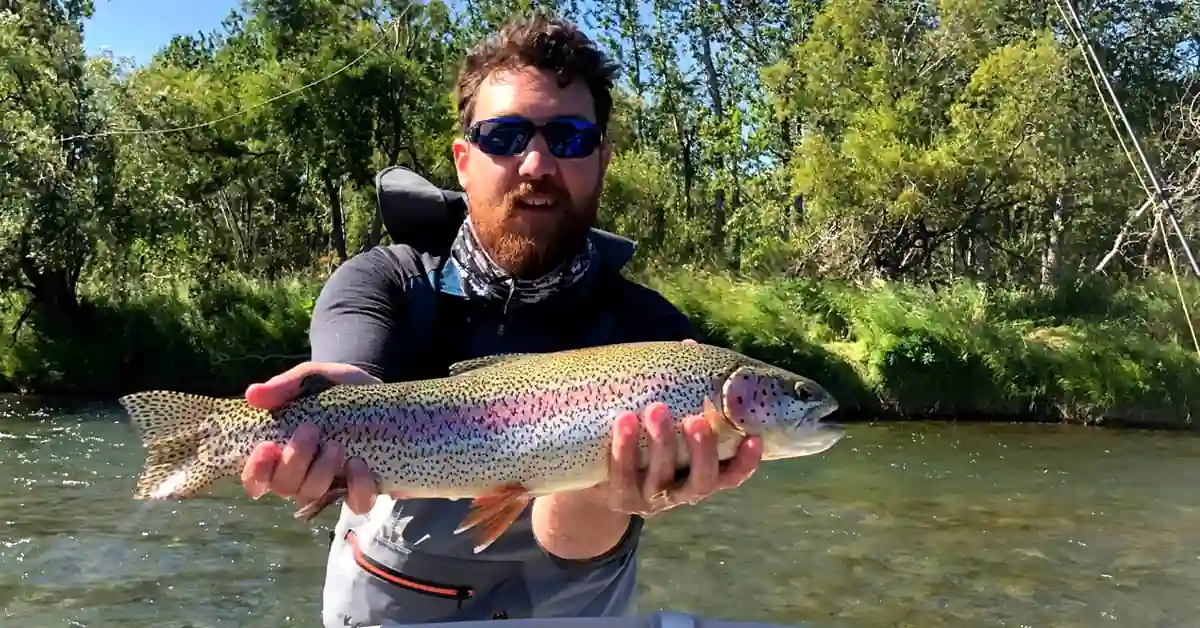
Some days, it’s all about precision. Clear water. Shallow seams. Fish that can see you long before you see them. Long leaders, quiet feet, and a drift that lands just right. The kind of fishing that reminds you why you fell in love with a fly rod in the first place.
Other days, the river surprises you. A pod of salmon holding in a deep slot. Char stacked so tightly it feels like you’ve stumbled into something secret. A trout that rockets out from under a cutbank, crushes a fly you were half-thinking about changing, and leaves you standing there wondering what just happened.
And then there are the afternoons that ask for patience. The river slows down, the fish get stubborn, and you’re reminded — again — that you’re not in charge out here. The river decides. It always has.
Evening
Setting Up, Winding Down.
The Light That Won’t Quit.
The raft finds its camp spot well before dark — which if you are here in July means you’ve got plenty of evening left. Camp goes up efficiently. Tents, kitchen, the fire if conditions allow.
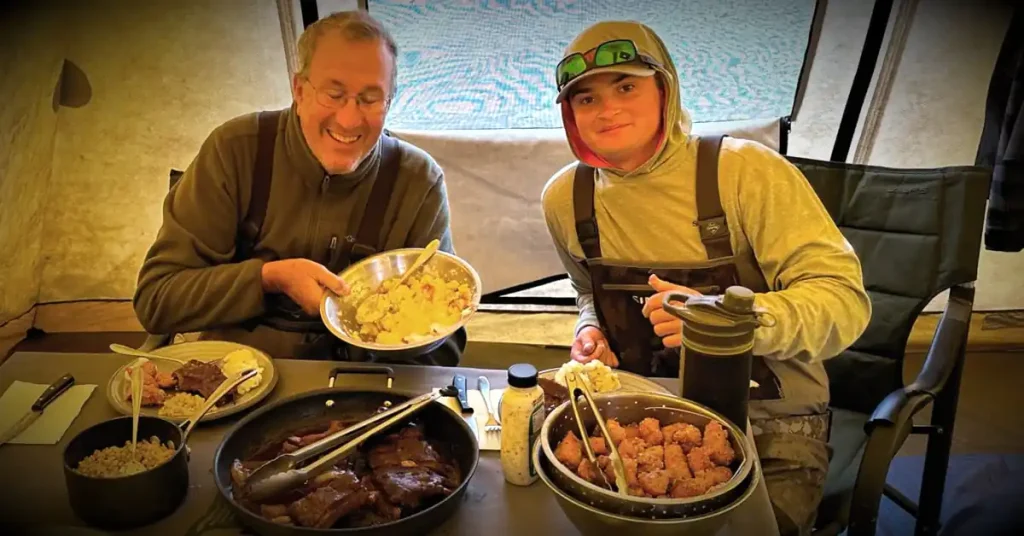
Dinner on a wilderness float is not roughing it. This is one of those details that surprises people who’ve never done a trip like this. Hot, hearty food — the kind that makes sense after a full day on the water. There’s something about the combination of cold air, tired legs, and a meal cooked over a camp stove that makes everything taste exceptional.
After dinner is when the day quietly wraps itself up. The conversation drifts. The river keeps moving. Someone will usually rig a rod again — there’s always that one run just upstream from camp that nobody could quite get to during the day. Sometimes it pays off.
The light in Southwest Alaska in July doesn’t really go away. It just gets lower and softer and orange, holding on for hours. The best photographs of the whole trip often happen right here.
What Makes It Different
You are getting to know the River by Day Four.
You Can’t Get That Any Other Way.
People ask what sets a wilderness float apart from other fishing trips. The honest answer: everything.
There’s no running back to a lodge for happy hour while the bite is still on just because the clock says so. You’re traveling downriver, into fresh water every day, camping where the fishing’s best. After dinner, you can step out and keep fishing — you’re right on it.
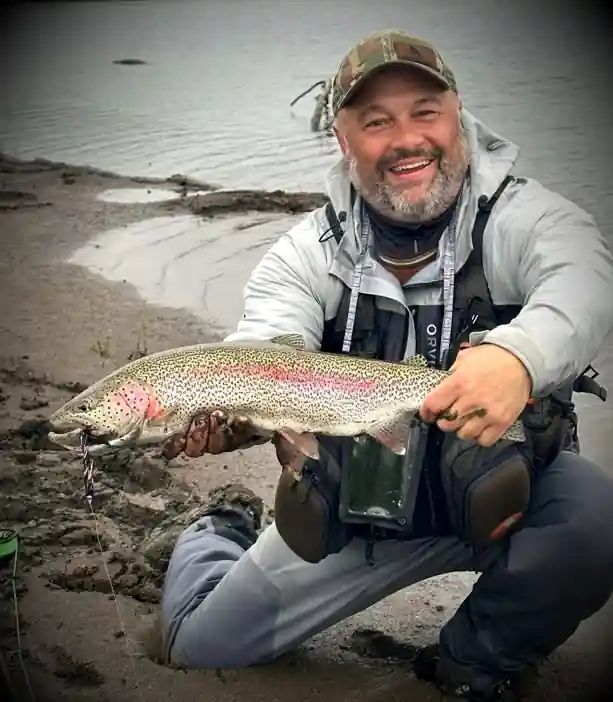
ou also develop a relationship with the river over the course of a week that you can’t get any other way. By day three or four, you start to understand it. You know what the water temperature means for where the fish are holding. You know which kind of clouds mean the rainbows may take on the surface. You know the rhythm.
“That’s what thirty years of guiding in Southwest Alaska is about, really. Not just knowing where the fish are — but knowing how to read a place, respect it, and share it with people who want to experience it the right way.” — Paul Hansen, Alaska Rainbow Adventures
The River’s Still Out There
Moving the same direction it always has.
Come find out what’s around the next bend.
A lodge trip…
– Fixed location, fished-out water
– Same runs, day after day
– Back to a room at sunset
Or:
A wilderness float…
• New water every morning
• Miles most people never see
• A week-long relationship with a river
• 30 years of reading it right
No alarm clock. No itinerary. Just the river, the fish, and the kind of morning that reminds you why you came to Alaska in the first place. That’s what a day on the water looks like out here.