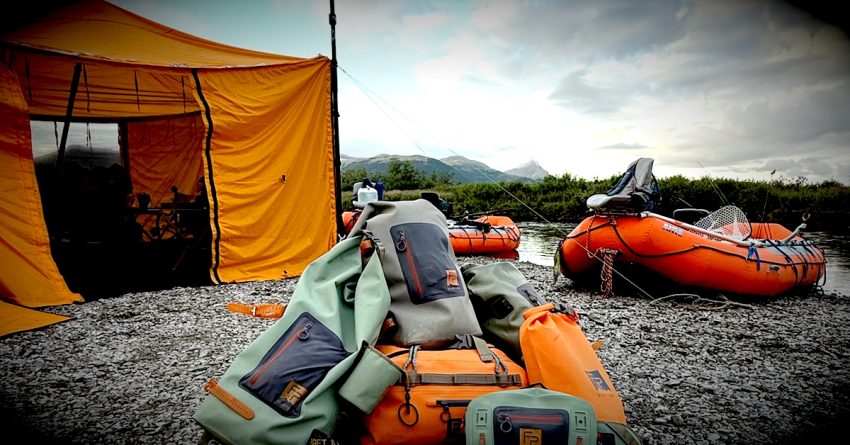
A few years ago, on the first night of a float, a guest pulled me aside while we were setting up camp. He looked around at the tents, the kitchen, the river sliding past in the evening light, and said:
“I didn’t know what to expect out here… but I didn’t expect this.”
He meant the organization. The comfort. The food. The systems. The calm. The feeling that everything was handled.
People hear “wilderness trip” and imagine roughing it. People hear “high-end” and imagine a lodge. A premium float trip is neither — it’s something else entirely, something most anglers don’t even know exists until they experience it.
People throw the word “high-end” around a lot these days. In most industries, it means thread counts, wine lists, and someone folding your napkin when you stand up. But out on a remote Alaska river, none of that matters. The river doesn’t care what brand of jacket you’re wearing or how many stars a lodge claims to have. It cares about weather, water levels, timing, judgment, and whether the people running your trip know what they’re doing.
Out here, “high-end” looks different. It’s quieter. More practical. More human.
The Gap Most People Don’t See Coming
Most people don’t realize how wide the gap is between a professionally run float trip and the average operation. On paper, a lot of trips look similar — same river, same dates, same species, same general idea. But once you’re out there, the differences show up fast. Sometimes they show up in ways you can’t ignore.
We’ve watched tents from other operators explode in the night. Seen pickups missed — clients stranded on a gravel bar waiting for a plane that didn’t come. We’ve witnessed camp systems fall apart in weather that we saw coming two days out. These aren’t worst-case hypotheticals. They’re things you witness when you’ve spent enough seasons on these rivers, moving through the same country as outfits that cut corners you can’t see until the wind finds them.
Most operators run lean. Lean on guides. Lean on systems. Lean on experience — and lean precisely on the things that matter most when the weather turns or the river rises.
A lot of outfits get by with the minimum number of guides they can manage. That means slower camp setups, slower breakdowns, fewer eyes on the river, and less attention to the details that make a trip feel smooth instead of chaotic. When something unexpected happens — and it always does — they’re reacting instead of anticipating.
Many camps are built around “good enough” gear. Tents that work fine until the wind hits. Cots that sag by day three. Kitchens that can’t keep up when the weather goes sideways. Food becomes fuel instead of comfort. Sleep becomes survival instead of rest. Guests feel like they’re roughing it because, frankly, they are.
And then there’s judgment — the biggest gap of all. A lot of operators can row a boat. A lot can point at a run and say, “Cast there.” But not many can read a river’s mood, anticipate weather shifts, manage risk quietly, or make the kind of decisions that keep a trip safe, comfortable, and on track without guests ever noticing the work behind it.
That gap is what this is really about.
It Starts With People
A high-end float trip isn’t about having a guide — it’s about having the right number of guides. Enough hands to keep the trip smooth without making you feel managed. Enough experience on the oars that you can relax into the rhythm of the river, knowing someone competent is reading water, watching weather, and thinking three steps ahead.
I’ve had guests tell me, “I’ve never felt so taken care of without feeling babysat.” That’s the balance. That’s professionalism. And it’s only possible when you’re not trying to run a seven-day float with two guides and a prayer.
Professionally guided means reading water at a glance, understanding fish behavior through the season, knowing how to teach without talking down, managing risk without making it obvious, and keeping morale high when the weather turns. It means making decisions that protect both the group and the experience — quietly, continuously, without fanfare.
Professionalism is invisible when it’s done right. But you notice its absence fast.
Real Camp Systems
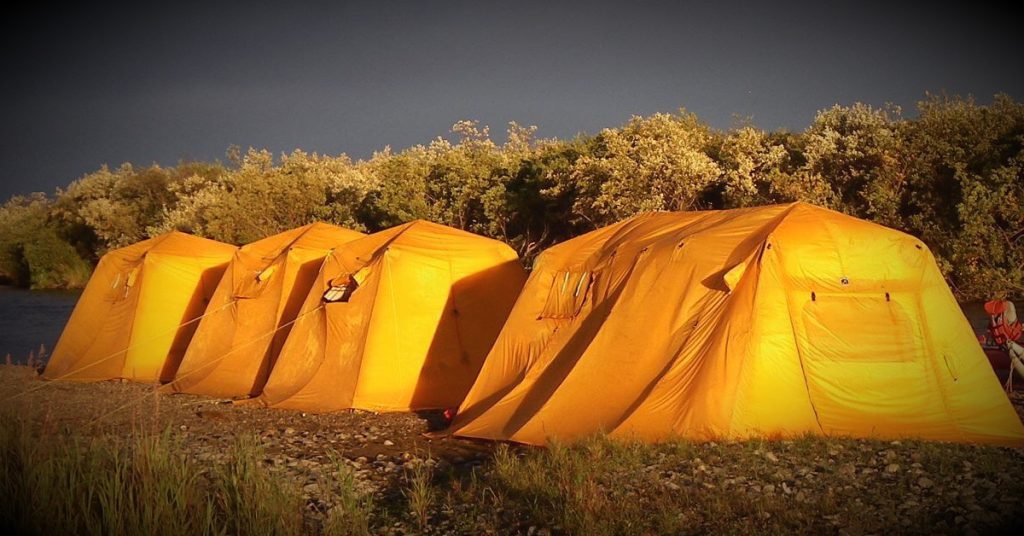
A lot of folks imagine “camping” as something you endure. But a well-run float trip doesn’t feel like that. High-end is a camp system that’s been shaped by decades of real river miles — tents that stay up when the wind decides to test your decisions, cots and pads that let you sleep instead of survive, a kitchen that turns out meals that feel like comfort rather than compromise.
We’ve seen what happens when the gear doesn’t hold. We’ve watched other camps come apart in storms we’d already prepared for. That experience — the accumulated weight of knowing what fails and why — is exactly what drives how we build and run every camp on every trip.
I’ve had chefs from the Lower 48 look at our river kitchen and say, “You’re doing that out here?” Yes. Because comfort matters more when you’re 80 miles from the nearest building, not less. Every piece has a purpose. Every workflow has been refined through seasons of trial and error, and lessons delivered by storms that didn’t care about anyone’s schedule.
The Night the Wind Came Early
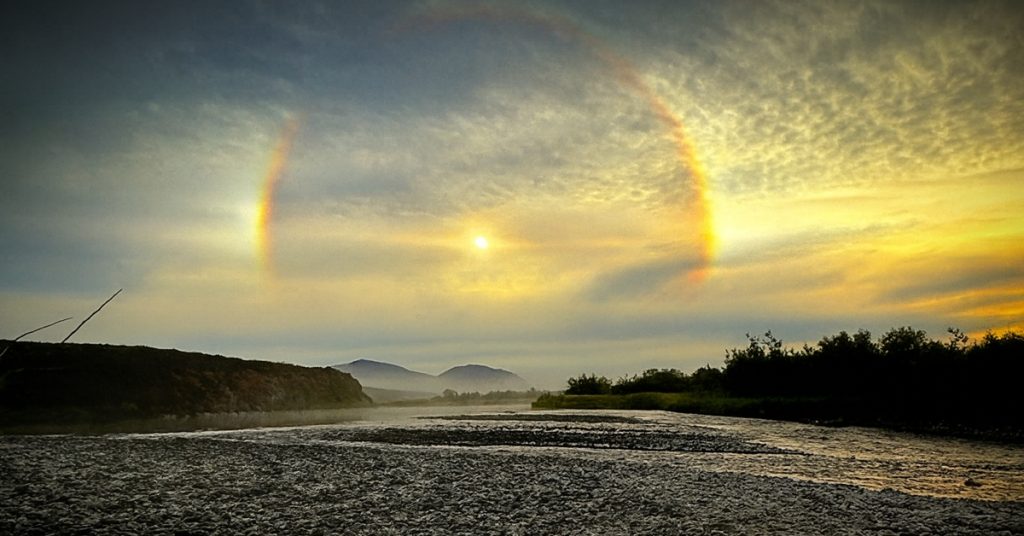
There’s a night I think about whenever someone asks what makes a float trip “premium.” It wasn’t dramatic enough for a TV show, and nobody got hurt — but it’s the kind of moment that separates a good trip from a great one, and a great one from a safe one.
We were on the upper Goodnews, late August, the kind of evening where the light hangs on longer than it should. The river was low, the fishing had been steady, and everyone was settling into that easy rhythm that comes after a few days on the water. Dinner was done, dishes drying, a couple of guests still out walking the gravel bar with cameras.
The forecast had called for a breeze. Nothing more.
But the river had other plans.
You learn to hear wind before you feel it. It starts as a change in tone — the cottonwoods upstream shifting in a way they weren’t shifting ten minutes ago. A kind of warning. I stepped out of the kitchen shelter and looked upriver. The mountains were wearing a darker shade of blue than they had at sunset. That’s when I knew the forecast was wrong.
“Wind’s coming early,” I told the guides. “Let’s tighten everything.”
Nobody panicked. Nobody rushed. Everyone just moved — tents re-staked, guy lines doubled, kitchen shelter reinforced, boats pulled higher on the bar. Guests watched from the fire ring, curious but not worried. They didn’t need to be.
By the time the first gust hit camp, everything was already secure.
It came hard — the kind of wind that makes you grateful for every decision you made in the last thirty years. The kind that tests your systems, your judgment, and your ability to read a river’s mood before it changes. We’ve seen what that same wind does to camps that weren’t ready for it. We didn’t need to see it again.
Guests slept through most of it. A few woke up, listened for a minute, and went back to sleep because the tents weren’t moving and the cots weren’t shaking. In the morning, they stepped out into a calm, clear day and asked, “Did it get windy last night?”
That’s premium. Not because the wind didn’t come — but because when it did, the people running the trip were already ahead of it.
That’s the part you can’t photograph. That’s the part you can’t fake.
Safety Is Not a Bullet Point — It’s a Culture
People think safety is gear. Gear helps. But safety is judgment, and judgment is a culture, not a checklist.
It’s knowing when a river is rising for real and when it’s just breathing. It’s knowing when a storm is building, when a bear is curious versus committed, when to push downstream, and when to hold. It’s knowing how to read a group’s energy, not just the water.
High-end also means communication systems that don’t quit when the weather does — satellite communication, redundant systems, clear protocols, guides who know how to use them without having to think about it. I’ve had guests say, “I didn’t expect to feel this safe out here.” That’s because real wilderness doesn’t have to feel risky when the systems are right. Redundancy isn’t a luxury out here — it’s the difference between a minor inconvenience and a real problem.
When you’re a hundred miles from the nearest road, you want someone who’s thought through the “what ifs” long before you ever step on the raft. We have. Repeatedly. Because we’ve seen the trips where nobody did.
The Real Premium: Judgment
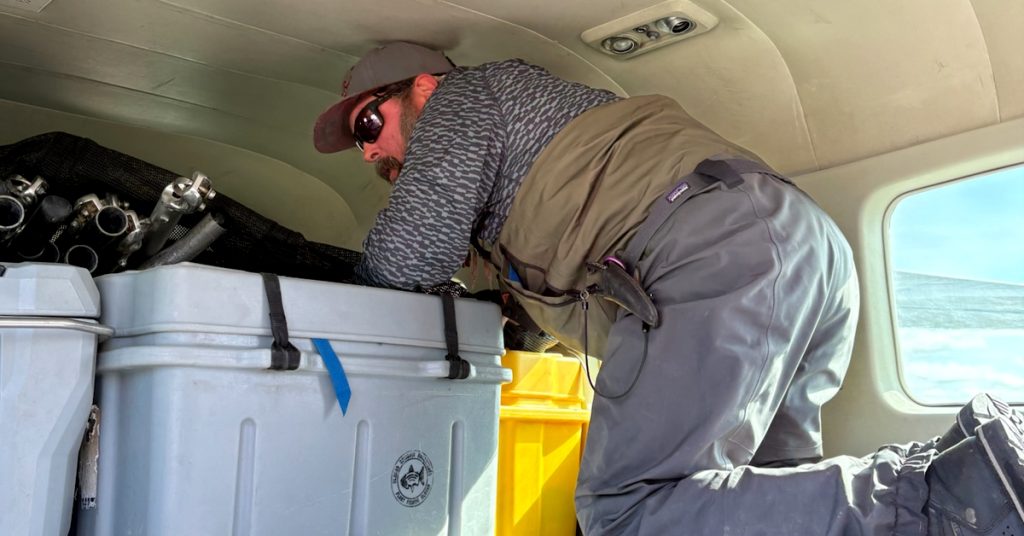
When everything lines up — flights, boats, food drops, timing, tides, water levels — it looks effortless. But that effortlessness is the product of years of doing it wrong, learning, adjusting, and doing it better. It’s the kind of smoothness you only earn by being out there when the river teaches you something you don’t want to learn twice.
The real premium — the part people feel but can’t always name — is judgment.
Judgment is knowing when to push downstream and when to hold. When to move camp and when to stay put. When a guest needs a hand and when they need space. When the fishing is about to turn on, and when it’s time to switch tactics entirely. I’ve had guests say, “I didn’t know you could feel this connected to a place.” That’s what decades on these rivers gives you — not just knowledge, but intuition. Not just information, but instinct.
Judgment is the thing you can’t buy, can’t fake, and can’t shortcut. It’s earned the long way — one season, one storm, one river mile at a time. And it’s the single biggest thing separating a trip that gets you down the river from one that keeps you immersed in it.
What High-End Actually Means
So when people ask what “high-end” means on a wilderness float trip, I tell them this:
It’s not luxury. It’s competence. It’s comfort. It’s calm. It’s the feeling of being taken care of without ever noticing the work behind it. It’s the kind of experience that lets you focus on the river, the fish, the light on the mountains, and the simple joy of being out there — far from everything except what matters.
It’s the kind of experience where guests step into camp and say, “I didn’t know a trip like this existed.”
Most trips don’t look like this. Most trips don’t feel like this. Most trips aren’t built like this. High-end isn’t a marketing term — it’s a standard. One earned over thirty years of river miles, storms, lessons learned the hard way, and a stubborn refusal to settle for good enough when you know what good enough costs you when it counts.
That’s what we’ve spent more than thirty years building, refining, and earning. And it’s why we’re still out here.
Alaska Rainbow Adventures has operated exclusive permit float trips in Southwest Alaska since 1993. Learn more at akrainbow.com.
