
Sockeyefest on the Alagnak: Alaska Rainbow Adventures’ Early July Float
If you’ve fished Alaska long enough, you already know what early July means on the Alagnak. The sockeye are running, the bears are on the gravel bars, and the river smells like it’s alive — because it is.
We call it Sockeyefest. Not because we came up with some clever marketing name, but because that’s genuinely what it is. Somewhere between a million and two million sockeye push through the Alagnak River system during this window, and when you’re standing in the braids watching the water literally boil with fish, “festival” is the only word that fits.
Why a Float Trip Changes Everything
Most visitors to Bristol Bay fish out of a lodge — fly out in the morning, fly back for dinner. There’s nothing wrong with that, but you’re working around a schedule, not around the fish.
On an Alaska Rainbow Adventures float, you’re living on the river. We put in at the headwater lakes — Kukaklek or Nonvianuk — and spend seven days moving downstream with the pulse of the run. When the fish stack up in a particular braid or gravel bar, we stay. When they move, we move. You’re not watching Sockeyefest through a window — you’re in the middle of it.
That also means sharing the Alagnak with everyone else who showed up for the buffet. Early July puts you in the middle of the same event drawing every brown bear in the drainage. You and the bears are there for the same reason, and they’ve been doing this a lot longer than you have.
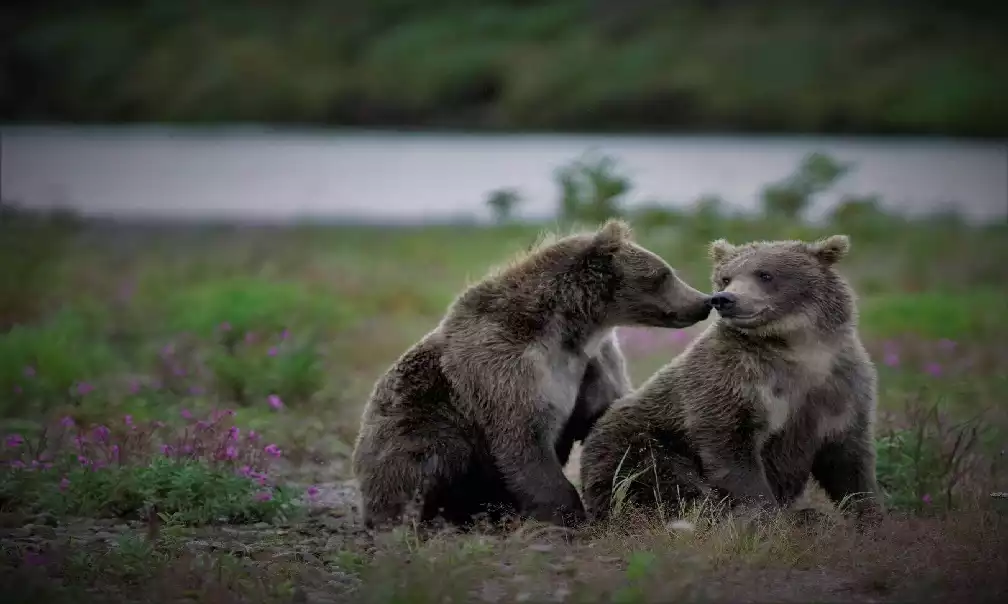
The good news is that bears with full access to salmon are almost never interested in people. They’re working. A bear on the Alagnak in early July has one thing on its mind, and it isn’t you. Most of what you’ll experience is more wildlife encounter than wildlife problem — a sow and cubs on the far bank, a big boar working a riffle a hundred yards upstream, the kind of thing you’d pay to see in a national park, happening for free while you’re fishing. Most guests come back talking about the bears as much as the fishing. Watching a 600-pound boar work the same gravel bar you waded an hour earlier is one of those things that reframes where you are and what you’re doing there. It’s not a sideshow. It’s the whole point.
What You’re Actually Fishing For
Sockeye are the headliner, but early July on the Alagnak is never a one-species show.
The king salmon run is still in its later stages — you’ll hook into them, usually without warning. A fresh king in Alagnak current is a different animal entirely, and you need to be ready for that possibility on every cast.

The rainbows in early July are still aggressive and responsive to mouse patterns before they lock into the egg bite later in the month. If you want to swing a foam mouse through a back eddy at 9pm with the sun still up and bears fishing the far bank, this is your window.
Fishing Sockeye: What the Guides Will Tell You
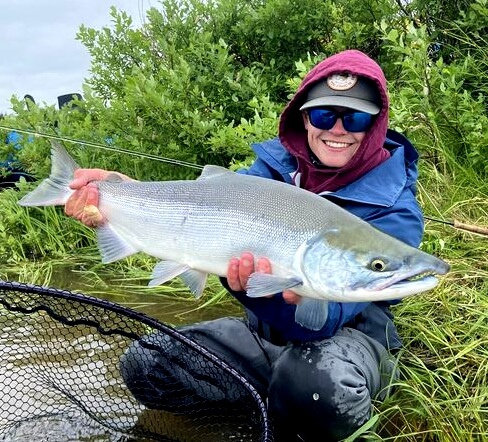
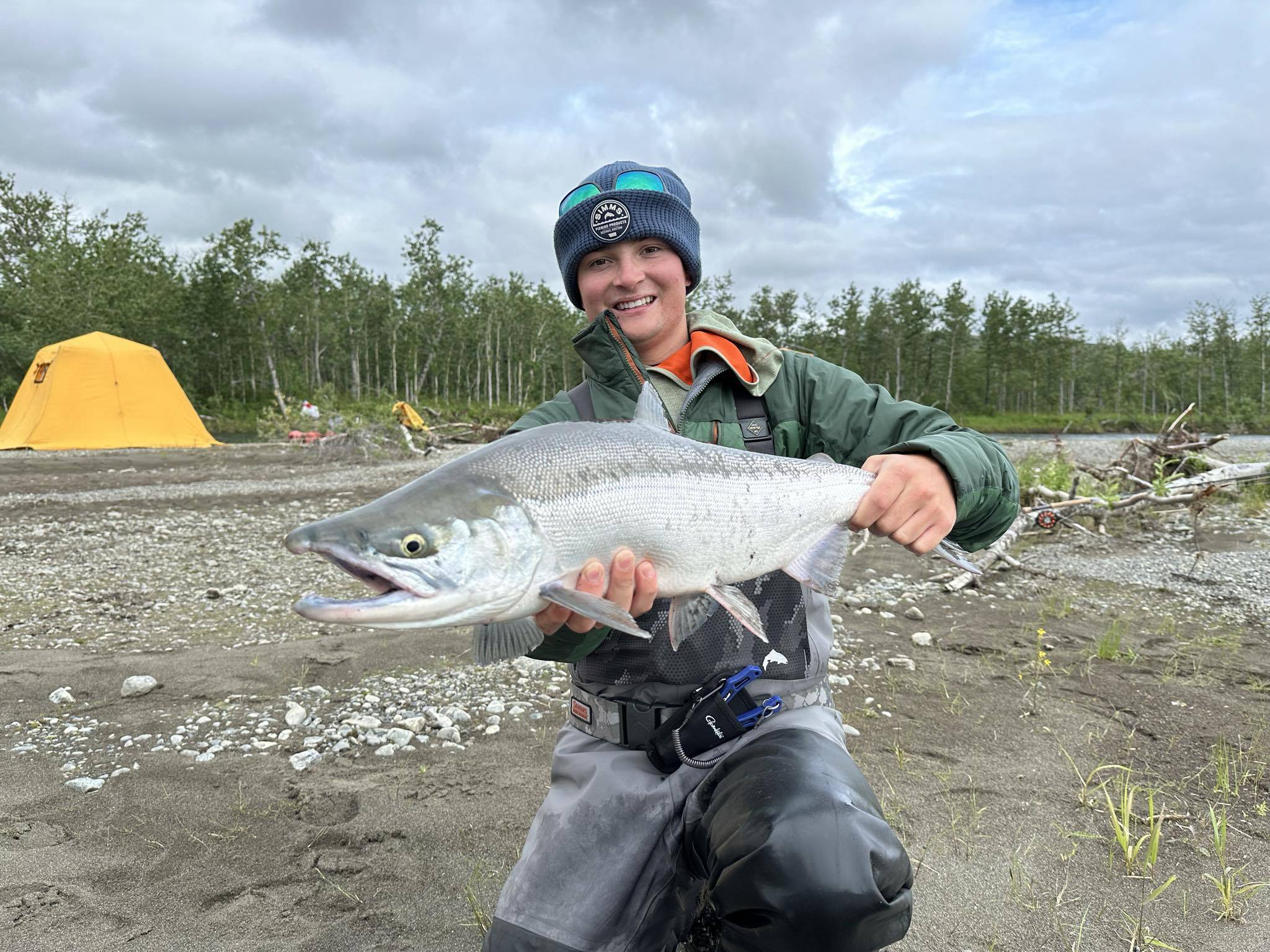
Sockeye don’t eat like kings or silvers. They’re not chasing your fly out of hunger — they’re migrating, focused, and largely indifferent to what you’re swinging past them. What works is presentation and current management, not pattern selection.
We fish a floating line with a straight 15–20lb fluorocarbon leader, six to nine feet long. No tapered trout leaders — you need abrasion resistance against the gravel, not delicacy. Maxima Ultragreen in 20lb has been a standard on these rivers for decades for good reason.
Weight is critical. You want just enough split shot — usually a BB or two — that you can feel your rig tick the bottom every few seconds. When that tick-tick-tick stops and you feel weight, that’s a fish. Set the hook.
The flies themselves are almost secondary. Sparse, unweighted patterns on a sharp 1/0 short-shank hook. Hot pink, chartreuse, burnt orange. A few wraps of yarn or some crystal flash. The guides will have what you need, but the presentation is what catches the fish, not the pattern.
Tackle That Holds Up
For sockeye, an 8 or 9-weight rod is the right tool. A 7-weight will technically work until a chrome ten-pounder hits the main current — then you’ll wish you’d gone heavier. Mid-range rods are fine; these fish are hard on equipment, and you’re not gaining anything by bringing your nicest rod to a week on gravel bars.
Your reel needs a smooth disc drag and enough backing — 150 to 200 yards of 20lb minimum. Fresh sockeye greyhound. They’ll clear the water multiple times and run line you didn’t expect to lose. A reel that hesitates or chatters at the wrong moment will cost you fish.
Bring a second setup if you want to fish trout and grayling. A 5 or 6-weight is all you need, and having it rigged and ready means you’re not breaking down your salmon rig every time you want to throw a dry fly into a back channel.
A few things worth knowing before you show up: felt-soled wading boots are illegal in Alaska — rubber soles with studs are the move on Alagnak gravel. Polarized glasses in amber or copper will help you read the water and spot the lanes where fish are staging. That’s not optional gear, it’s how you catch more fish. Leave the trout hemostats home and bring real pliers. You’ll thank yourself the first time you’re trying to back a 1/0 hook out of a sockeye jaw in moving current.
Camp on the River
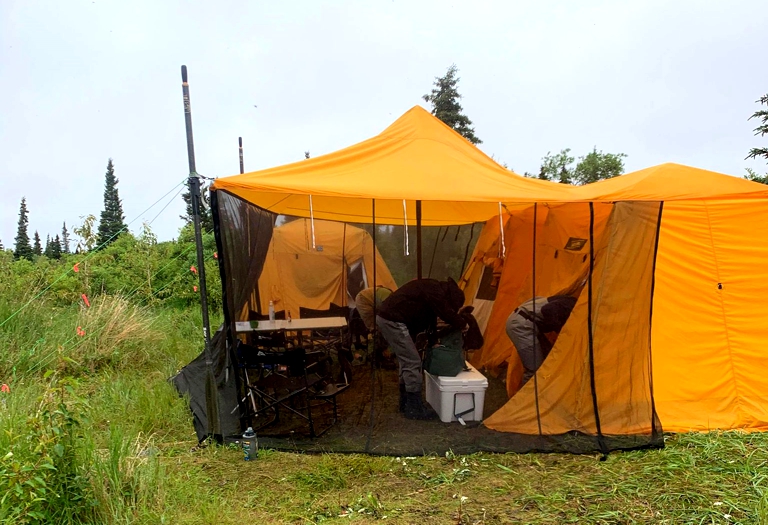
People ask what it’s like to live on the Alagnak for a week, and the answer depends entirely on whether your camp systems are built for the place or built for a catalog photo.
July is actually the best weather window Southwest Alaska offers — longer stretches of sun, lighter winds, and the warmest temperatures you’ll see all year on these rivers. That said, you’re still in Alaska, and a bluebird morning can turn into sideways rain before dinner. It doesn’t happen every day, but it happens. That’s not a reason to hesitate — it’s a reason to have the right camp.
We’ve tried most of what’s out there. Poles bent. Fabrics tore. Designs that looked solid in good weather turned into liabilities when a real Alaska front moved through. That’s why we use Alaska-built tents made here, by people who know what weather actually means in Bristol Bay. When the wind kicks up these tents don’t fold. They hold. You can stand up in them, which matters more than you’d think after a long day wading and chasing Rainbows and Sockeye.
Camp goes in deliberately — good bank access, good downstream visibility, sites we’ve used enough to know how they behave in weather. Nothing about camp is left to figure out on the fly. Bear-aware setups are standard: food stored properly, our guides have been doing this long enough to read a situation before it becomes one.
After 30 years floating these rivers, the camp systems run themselves. Which means your job is to fish.
And if you’ve never eaten a sockeye pulled from clean Bristol Bay water and cooked over a camp stove or grill the same evening — that’s reason enough to book the trip on its own.
