Why Late August and September Might Be Southwest Alaska’s Best-Kept Secret
What more than thirty years on these rivers have taught me about the final weeks of the season—and why they can be some of the best.
On The Drift · Field Notes Since 1993
Thirty-Three Seasons on the Water
Every year the emails start arriving long before the current season is over — and the question is almost always the same: when's the best time to come?
Some arrive in the middle of winter. Others come while we're still floating guests down the Goodnews or the Kanektok. Lately, it's not unusual to hear from anglers planning a trip a year — or even two years — ahead. It's probably the question I'm asked more than any other. It's also the hardest one to answer.
People expect me to name a week. Instead I usually answer with another question: what kind of fishing are you hoping to experience? Alaska isn't one fishing season. It's several seasons that quietly flow into one another, and every few weeks the rivers become something slightly different.
One part of the season is still too often overlooked: the stretch from late August into September. Some anglers see those dates near the bottom of a calendar and assume the best fishing must already be behind us. After more than thirty years on these rivers, I can tell you the opposite is often true. Those final weeks can produce some of the strongest fishing, most striking country, and best all-around trips of the entire season.
Since founding Alaska Rainbow Adventures in 1993, I've spent more than three decades building this business around these rivers — guiding every trip myself in the early years, and today working alongside an exceptional team of professional guides who spend each season on the water while I focus on overseeing the operation.
I still spend time on the rivers when I can, but a lot of what fills this piece comes from something just as valuable: comparing notes with guides who were on the water while I was handling the countless details that keep an outfitting business running. No one person sees everything a river does in a summer. A team does. Some of those guides have been with Alaska Rainbow Adventures for many years, and their experience has become part of the way we operate. One person's observation becomes everyone's knowledge.
That team is one of the things I'm proudest of. When I started Alaska Rainbow Adventures in 1993, I guided every trip because there wasn't anyone else to do it. Over the next three decades, as the business grew, I realized that building a great outfitting operation wasn't about doing everything myself — it was about surrounding myself with guides who cared about these rivers as much as I did. Today, our guides spend the season on the water while I focus on the many moving parts of running the business, but we stay in constant communication. Throughout the season we compare notes on where fish have moved, which flies are producing, and how changing water conditions are affecting the fishing. Our guests benefit from that shared knowledge every day of the season.
The Season Turns
When August Arrives
I don't have a date for when August actually begins on the river. The calendar says one thing. The river usually says another.
For us it starts with little things — the mosquitoes losing interest, a fleece going on over coffee, the sun hanging a little lower each evening. Most of our guests arrive from time zones two, three, or even four hours ahead of us. For the first couple of mornings they're awake before anyone else, wandering down to the water with a cup of coffee while camp is still quiet. By about the third day, something changes. They stop asking what time it is. Breakfast happens when breakfast is ready. We launch when the rafts are packed. Dinner is ready when dinner is ready. Before long, watches don't seem quite as important. The river has quietly reset everyone's clock — not because anyone told them to slow down, but because that's simply what life out here does.
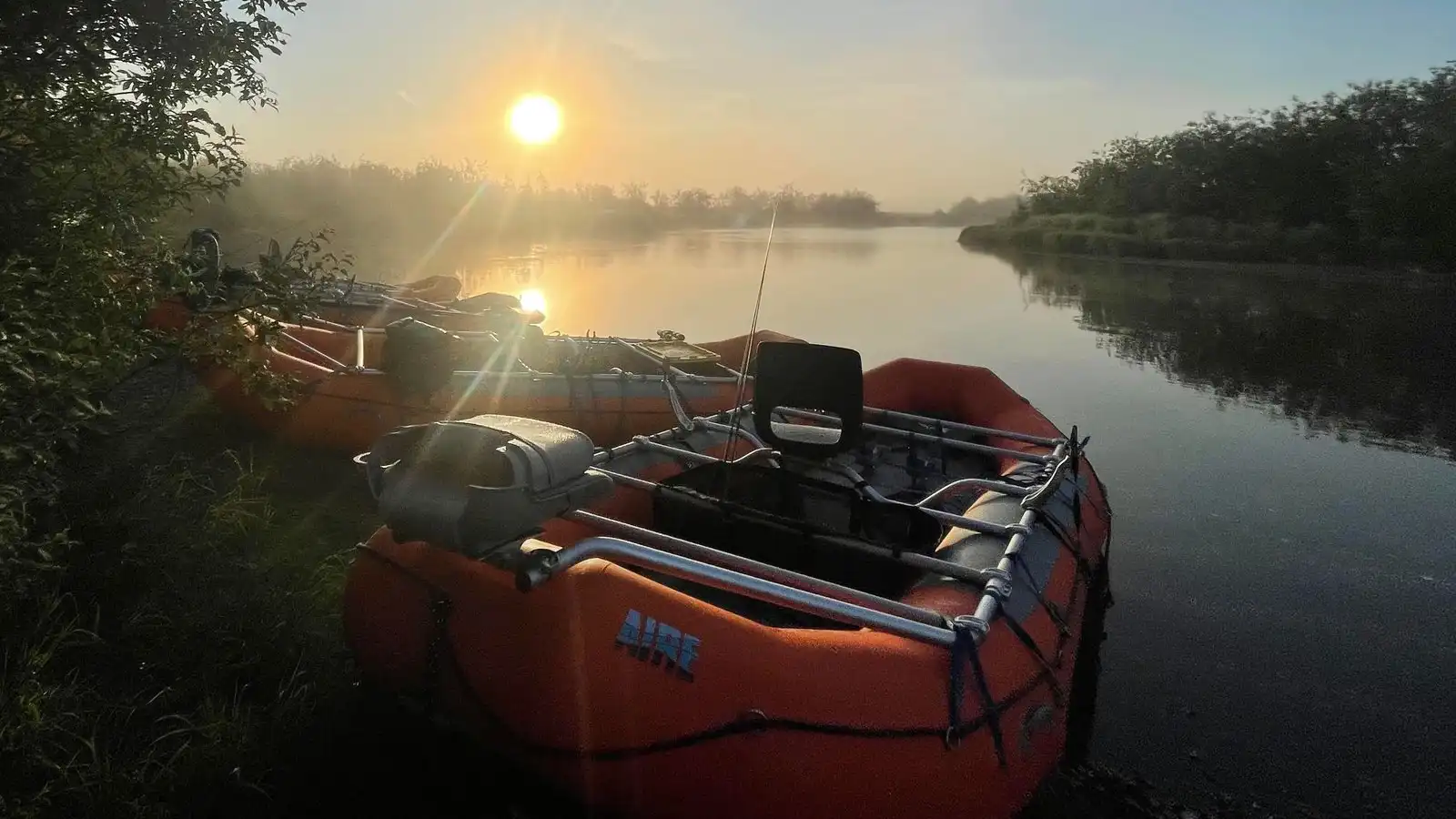
The day begins quietly: cool air, still water, and another day on the river waiting to unfold.
Togiak National Wildlife Refuge · Fly-in from Bethel
The Goodnews River in August
If there's one word I associate with the Goodnews River, it's variety, and August is when that variety is on full display.
You might begin the morning swinging flies for fresh coho moving through a broad run, watch sockeye working their spawning beds by late morning while rainbow trout begin gathering below them, then drift into a side channel after lunch where Dolly Varden seem to appear out of nowhere. None of that feels forced. It's simply what this Southwest Alaska river offers.
Coho start pushing into the system in late July, and by August they're thick and chrome, many still carrying sea lice from salt water. Fresh coho are curious — they'll move a surprising distance to inspect a swung fly, sometimes following it nearly to the rod tip before deciding to eat. Then everything comes alive. The first run downstream, the jump, sometimes three or four. Our guides have watched guests laugh out loud before the fight was even over, simply because they couldn't believe how much energy one fish possessed.
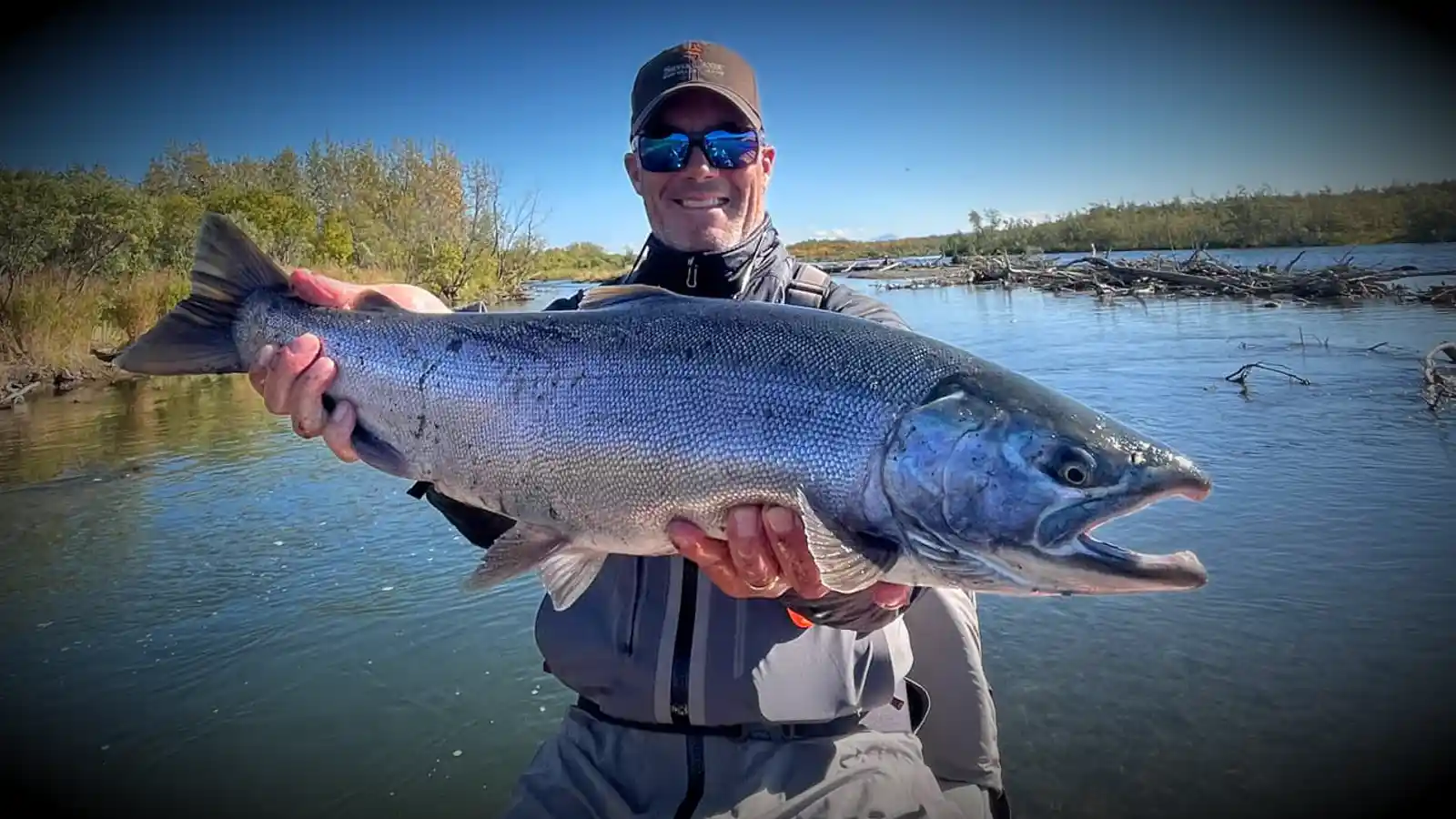
A fresh August coho, still bright from the sea and full of the energy that makes silvers unforgettable.
Plenty of first-time guests arrive telling us rainbow trout are the only fish they really care about — coho are just a bonus. That idea usually lasts about a day. One of our guides remembers a guest saying exactly that, then hooking a bright silver three days later that cleared the water twice before he'd even settled in. "Now I understand," he told his guide. He spent the rest of the trip asking to swing for coho before they'd even talk trout.
You learn more about a river in a bad fishing day than you do in a great one.
Underneath all of that, another story is unfolding. Sockeye are actively spawning throughout much of the drainage, with chum joining them in many sections of the river, and every spawning fish changes the water around it — eggs drifting into seams, buckets, and soft edges that rainbow trout have been reading a lot longer than we have. Ask how our guides know where the trout are holding, and the honest answer is they're usually watching the salmon, not the trout. Find the spawners, watch how the current carries food, then ask yourself where you'd sit if every meal floated straight toward you.
That's also why August rainbows run heavy. It isn't the calendar — it's weeks of feeding on one of nature's richest food sources. When a guide slides the net under one of those broad-shouldered fish, it's obvious it's been eating well: thick across the back, powerful through the tail, built for current. Mature Alaska rainbows don't panic and cartwheel the way people expect. They stay deep and use the current with real efficiency. Every head shake feels deliberate.
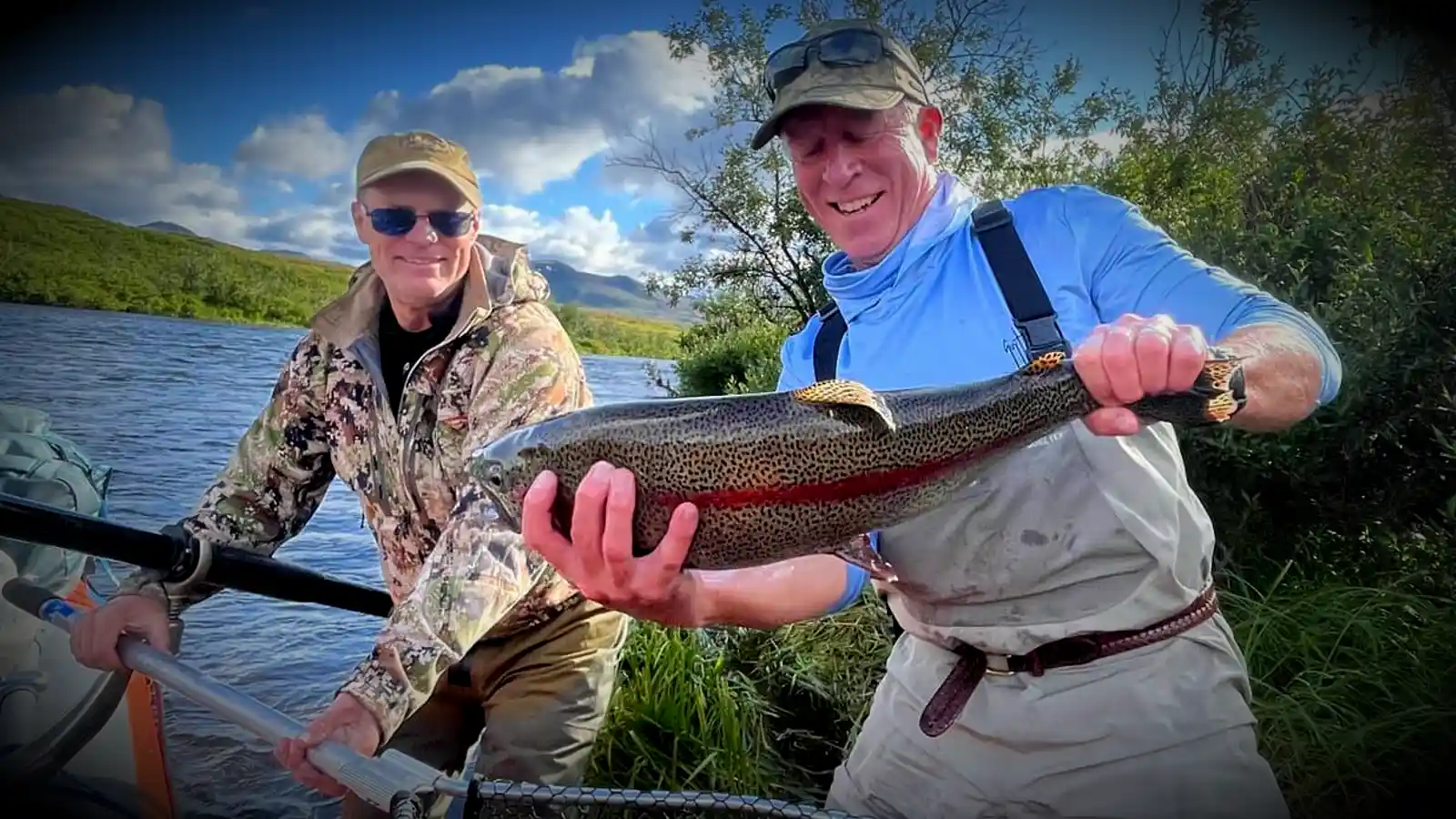
Weeks of feeding behind spawning salmon produce some of the heaviest rainbow trout of the season.
By late August, those different parts of the river's season have come together. Fresh coho are still moving in, rainbows have had weeks to put on weight behind spawning salmon, and Dolly Varden are spread throughout the system in their fall colors. The mornings are cooler, the insects have eased, and the tundra is beginning to turn. It isn't the tail end of the good fishing. For many anglers, it is the point when the season is at its most complete.
Camp has its own rhythm. Waders hang drying while someone starts coffee. Another guide is checking tomorrow's leaders or replacing a worn section of fly line. Dinner comes together without much conversation because everyone already knows what needs doing. Guests wander down to the river, camera in hand, while the evening settles over camp. Those quiet hours become some of the moments people remember most.
There are evenings when dinner is over, the dishes are done, and camp settles into its own routine. While the guides finish the last few chores and get things ready for tomorrow, guests often find themselves with nowhere they need to be and nothing demanding their attention. Some wander down to the water. Others sit with another cup of coffee or simply enjoy the quiet. Those unhurried evenings become some of the moments people remember most.
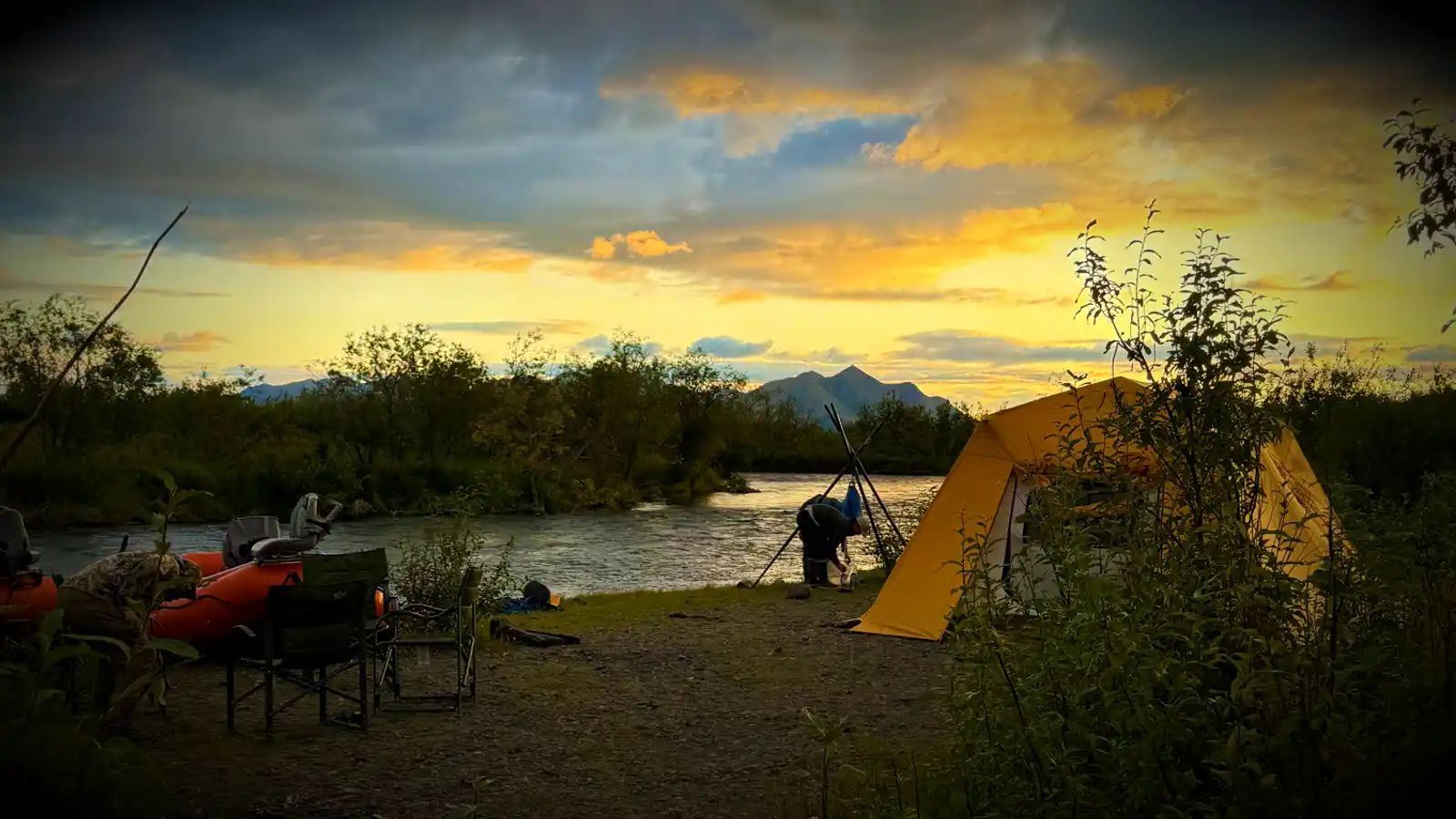
After dinner and the last camp chores, the evening settles in and nobody is in much of a hurry.
And that's really the thread running through an August trip on the Goodnews: paying attention. Guests often assume our guides know every inch of this river. The truth is we're still learning it, every season. A narrow seam, a quiet edge where two currents meet — those spots don't announce themselves. Sometimes I can explain why we stopped there. Sometimes I honestly can't. I still occasionally stop at a run because I think it ought to fish better than it does. The river usually reminds me who's making the decisions.
Togiak National Wildlife Refuge · Late Season
Late August Into September
These aren't consolation dates at the end of the calendar. They are some of the best trips we run all season.
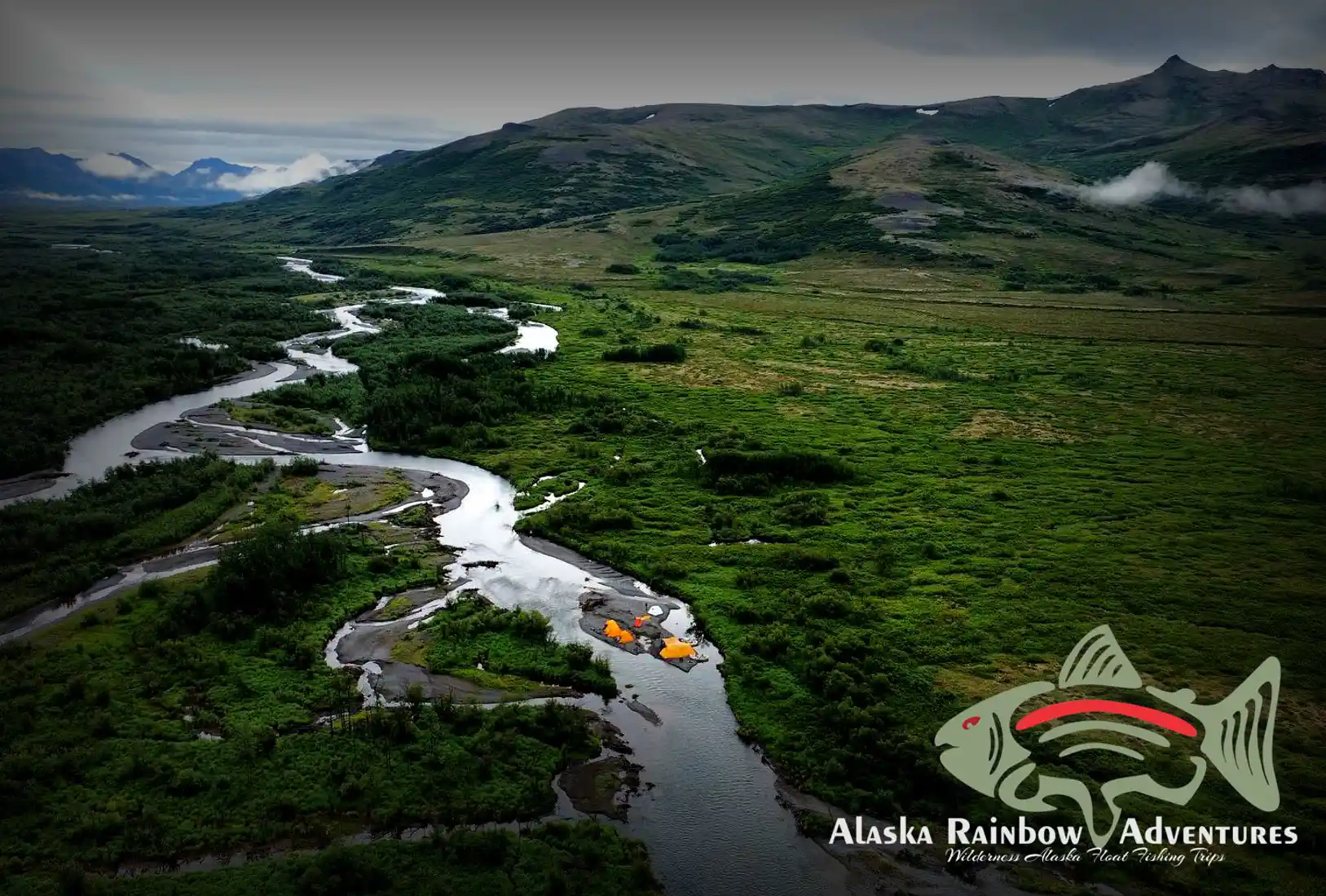
The Kanektok's broad valley makes the scale and remoteness of the country immediately clear.
The Kanektok is not a larger river by volume. What makes it a larger system is its length. Our float covers nearly 100 river miles, compared with roughly 67 miles on the Goodnews, and we have about the same number of days to complete it. That difference sets the pace. On the Kanektok, we need to keep moving downstream and cover more miles each day, no matter what part of the season we're fishing.
By late August and into September, the Kanektok takes on a character all its own: cooler mornings, the first yellow willows, an occasional frost on the tundra, fresh coho still entering the system, and rainbow trout, char, and Dolly Varden feeding heavily as the season progresses.
The fishing has had an entire summer to build toward this window. The rainbows are in prime condition, char and Dolly Varden are colored for fall, and fresh silvers can still bring the kind of explosive fishing people expect from August. At the same time, cooler water and shorter days change the feel of the river. Fall colors spread across the valley, the morning light lasts longer, and the country seems even bigger and quieter than it did a month earlier.
September changes the atmosphere, but it doesn't change the mileage. The river may feel quieter in early fall, yet the trip still requires steady progress and purposeful days on the water. For anglers who value mature rainbows, aggressive char and Dolly Varden, fresh coho, fewer insects, and the look of Alaska turning toward autumn, it is difficult to choose a better time. Many returning guests have come to regard these late trips not merely as a good alternative, but as the finest weeks of the season.
For anglers looking for a more intimate river, we occasionally offer trips on the Arolik. Its character rewards careful presentations and close attention to the water. We don't schedule many trips there, which is part of what makes it special, but it's another reminder that every river has its own personality.
Choosing Your River
Choosing the Right River
My job isn't to convince you one river beats another. It's to help you find the one you'll enjoy most.
Some guests come back to the Goodnews three or four times for its variety. Others fish the Kanektok once in September and book the next year's trip before they've left Alaska. After thirty-three seasons, I think less about which river is "best" and more about which one fits the person in front of me. That's a far more interesting conversation, and one I still enjoy having.
A river teaches you which questions to ask, not which answers to expect.
What people remember years later rarely starts with a fish. It's fog lifting off the water while coffee brews. A moose feeding quietly in an oxbow. Guests who met four days earlier laughing together like old friends. The fish are what bring people to Southwest Alaska for fly fishing. Everything else is what brings them back.
Every spring I still feel the same anticipation I've had since 1993 — checking gear, coordinating logistics, getting out on the water myself when I can. Every August I catch myself slowing down long enough to notice the first yellow willow leaf and the first bright coho rolling in a familiar run.
If you've only ever looked at July or early-August dates, take another look at late August and September. You may discover, as many of our returning guests have, that the season isn't winding down at all. In some of the ways that matter most, it is reaching its peak.
See you on the river.
Paul Hansen
Owner & Outfitter, Alaska Rainbow Adventures — guiding wilderness float fishing expeditions in Southwest Alaska since 1993.
Ready for Late August or September?
Tell Paul what you want most from the trip—Goodnews variety and coho or the Kanektok in early fall—and he'll help you choose the right river and dates.